Southern Rhone Spotlight
Southern Rhône Viticulture, Winemaking, and Production Overview
1. Climate and Environment
The Southern Rhône covers roughly 71,000 ha, extending from Montélimar southwards to Avignon and Nîmes.
It has a Mediterranean climate: hot, dry summers, mild winters, and most rainfall in spring and autumn.
Average annual precipitation is around 600–700 mm, with over 2,700 hours of sunshine.
The Mistral wind remains influential, keeping vines healthy by reducing humidity but also lowering yields through shoot damage.
Irrigation is permitted under AOC regulations in drought years.
Soils and exposure vary widely, contributing to the region’s diversity of styles.
2. Soils and Terroir
The landscape is gentler than in the north — rolling hills and plateaus rather than steep terraces — but soil diversity is remarkable:
- Châteauneuf-du-Pape: Thick layers of galets roulés (large, rounded quartzite pebbles) over clay and sand; retain heat and promote ripeness.
- Gigondas / Vacqueyras: Clay-limestone and sand with gravel terraces; slightly higher elevation for freshness.
- Lirac: Sandy and stony soils similar to Châteauneuf, on the right bank.
- Tavel: Chalky gravel, sand, red clay, and quartz pebbles; ideal for full-bodied rosés.
- Rasteau: Marl and pebbly terraces; suited to both dry reds and fortified VDNs.
- Beaumes-de-Venise: Limestone and sandy marl slopes under the Dentelles de Montmirail.
- Clairette de Die / Crémant de Die: Clay-limestone and marl soils in the Drôme hills for sparkling wines.
3. Grape Varieties and Key Characteristics
Red Grapes
| Variety | Budburst / Ripening | Skin Thickness | Acidity | Tannins | Flavour Intensity | Typical Flavours | Role / Style | Main Hazards |
|---|---|---|---|---|---|---|---|---|
| Grenache Noir | Mid | Thin–Medium | Medium–Low | Medium | High | Strawberry, garrigue, dried plum, spice | Backbone of Southern blends; body, alcohol | Drought, oxidation, rot if rain at harvest |
| Syrah | Mid–Late | Thick | Medium–High | High | High | Blackberry, pepper, violet, smoke | Adds colour, structure, spice | Heat stress, shrivel |
| Mourvèdre | Late | Thick | Medium | High | High | Black fruit, game, earth, herbs | Depth and longevity | Needs warmth; coulure |
| Cinsault, Counoise, Carignan | Early–Mid | Thin | Medium–Low | Low–Medium | Medium | Red fruit, floral, spice | Lightness, freshness, colour in blends | Drought, dilution |
White Grapes
| Variety | Budburst / Ripening | Acidity | Flavour Intensity | Typical Flavours | Role / Style | Hazards |
|---|---|---|---|---|---|---|
| Grenache Blanc | Mid | Medium | Medium | Pear, citrus, herbs | Common blending grape | Oxidation, drought |
| Clairette Blanche | Early | High | Medium | Floral, apple, saline | Freshness, sparkling base | Frost, low yield |
| Bourboulenc | Mid | High | Medium | Citrus, almond, herbs | Adds lift and acidity | Poor set |
| Roussanne / Marsanne | Mid–Late | Medium–High | High | Floral, waxy, honeyed | Structure and complexity | Rot, low yield |
| Viognier | Early | Low | High | Apricot, peach, floral | Minor blending or single varietal | Coulure, heat stress |
| Muscat Blanc à Petits Grains | Early | High | High | Orange blossom, apricot, honey | Used for fortified Muscat de Beaumes-de-Venise | Sunburn, over-ripeness |
4. Vineyard Management and Yields
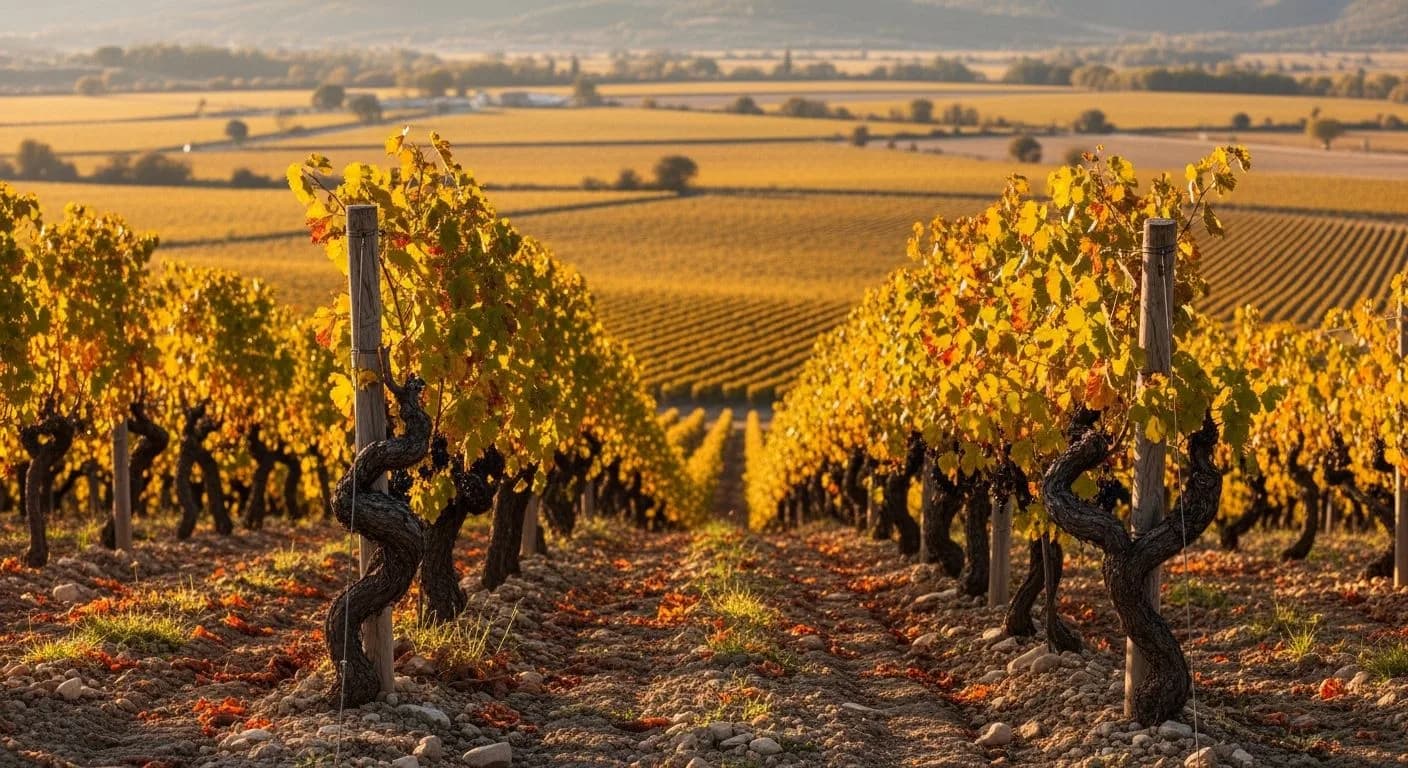
Vineyards are mostly on plains or gentle slopes, allowing some mechanisation, though top Cru sites remain hand-harvested.
Vines are traditionally bush-trained (gobelet), though trellising is increasing.
Typical yields (hL/ha):
- Côtes-du-Rhône: 52 (max); usually 45–50.
- Côtes-du-Rhône Villages: 41 (max).
- Châteauneuf-du-Pape: 35 (max); actual 31–33.
- Gigondas / Vacqueyras: 36–38.
- Tavel: 42 (rosé only).
- Rasteau VDN: 30.
- Clairette de Die: 37–45 depending on style.
- Muscat de Beaumes-de-Venise: 30 (VDN limit).
Average planting densities: 3,000–4,500 vines/ha, higher on hillier sites.
5. Appellations and Production Overview
The Southern Rhône produces roughly 2.5–3 million hectolitres annually (≈250–300 million litres) — nearly 94–95% of the Rhône Valley’s total wine.
Composition: Red 85%, Rosé 8–10%, White 5–7%.
Major Appellations and Styles
- Côtes-du-Rhône / Villages: Broadest category; Grenache-based reds and blends from across the region.
- Châteauneuf-du-Pape: Flagship Cru; 13 permitted varieties; mainly powerful, long-lived reds (95%) with some whites (5%).
- Gigondas / Vacqueyras / Lirac / Cairanne / Vinsobres: Grenache-Syrah-Mourvèdre blends; complex, structured reds; limited rosé and white production.
- Tavel AOC: Rosé-only Cru (no reds or whites); deep colour, full body, spice and red-berry intensity; ~933 ha, average yield ~42 hL/ha.
- Rasteau AOC: Produces both dry reds and Rasteau VDN fortified wines (red, white, rosé) — minimum 15% abv and 45 g/L residual sugar.
- Muscat de Beaumes-de-Venise AOC: Fortified sweet wines (VDN) made from Muscat Blanc à Petits Grains; minimum must sugar 252 g/L, fortified to 15–16% abv with ~100 g/L residual sugar. Aromas of orange blossom, apricot, and honey.
- Clairette de Die / Crémant de Die: Sparkling wines — Méthode dioise ancestrale (Muscat Blanc à Petits Grains + Clairette) or traditional method (Crémant de Die, mainly Clairette).
- Other notable Crus: Beaumes-de-Venise (dry reds since 2005), Rasteau, and Lirac (right bank analogues to Châteauneuf).
6. Winemaking Practices
Reds and Rosés
- Fermentation: Traditional or stainless steel; some whole-bunch use.
- Extraction: Gentle; extended maceration for concentration.
- Aging: Typically 6–24 months in concrete, foudres, or oak barrels.
- Rosé (Tavel): Direct pressing or limited maceration for deeper colour and fuller texture.
Whites
- Fermentation in stainless steel or barrel; limited new oak.
- Lees stirring (bâtonnage) used for texture; malolactic often partial.
Fortified Wines (VDN)
- Muscat de Beaumes-de-Venise / Rasteau VDN:
Grapes harvested very ripe (~252 g/L sugar). Fermentation arrested by mutage (addition of neutral grape spirit) to 15–16% abv. Minimum 45 g/L residual sugar (often 90–120 g/L for Muscat).
Wines matured briefly in inert tanks or old wood; oxidative styles rare.
Sparkling Wines
- Clairette de Die: Méthode dioise ancestrale—one fermentation stopped mid-way to retain natural sweetness and CO₂ (≈7–8% abv).
- Crémant de Die: Traditional method (second fermentation in bottle), minimum 9 months lees aging.
7. Recent Trends
- Rising focus on lower yields and site-specific vinification in Crus.
- Increased organic and biodynamic farming (notably in Châteauneuf-du-Pape and Gigondas).
- Growing demand for premium rosé (Tavel, Lirac).
- Revival of fortified Muscat and Rasteau VDNs with fresher, less oxidative styles.
- Sparkling production expanding, especially Crémant de Die exports.
8. Advantages and Disadvantages
Advantages:
- Hot, dry Mediterranean climate ensures ripeness and consistency.
- Terroir diversity and blending flexibility enhance complexity.
- Long tradition across still, rosé, fortified, and sparkling wines.
Disadvantages:
- Heat stress and drought increasingly problematic.
- High yields can dilute quality.
- Market oversupply of basic Côtes-du-Rhône.
9. Reputation and Market Position
The Southern Rhône is renowned for powerful Grenache-led red blends, particularly Châteauneuf-du-Pape, as well as benchmark rosés from Tavel, and prestigious fortified Muscat de Beaumes-de-Venise.
Rasteau VDNs and Clairette de Die sparkling wines add stylistic breadth.
Prestige Crus command global recognition, while generic Côtes-du-Rhône provides approachable value.
10. Summary
The Southern Rhône is a landscape of warmth, sunshine, and variety — from Grenache-dominant reds to full-bodied rosés, luscious fortified Muscats, and crisp sparkling wines.
Its Mediterranean climate, complex soils, and blending heritage make it one of France’s most diverse and dynamic wine regions, uniting tradition with modern craftsmanship.
Check your knowledge
Expert quiz