Riesling
Riesling
1. Overview
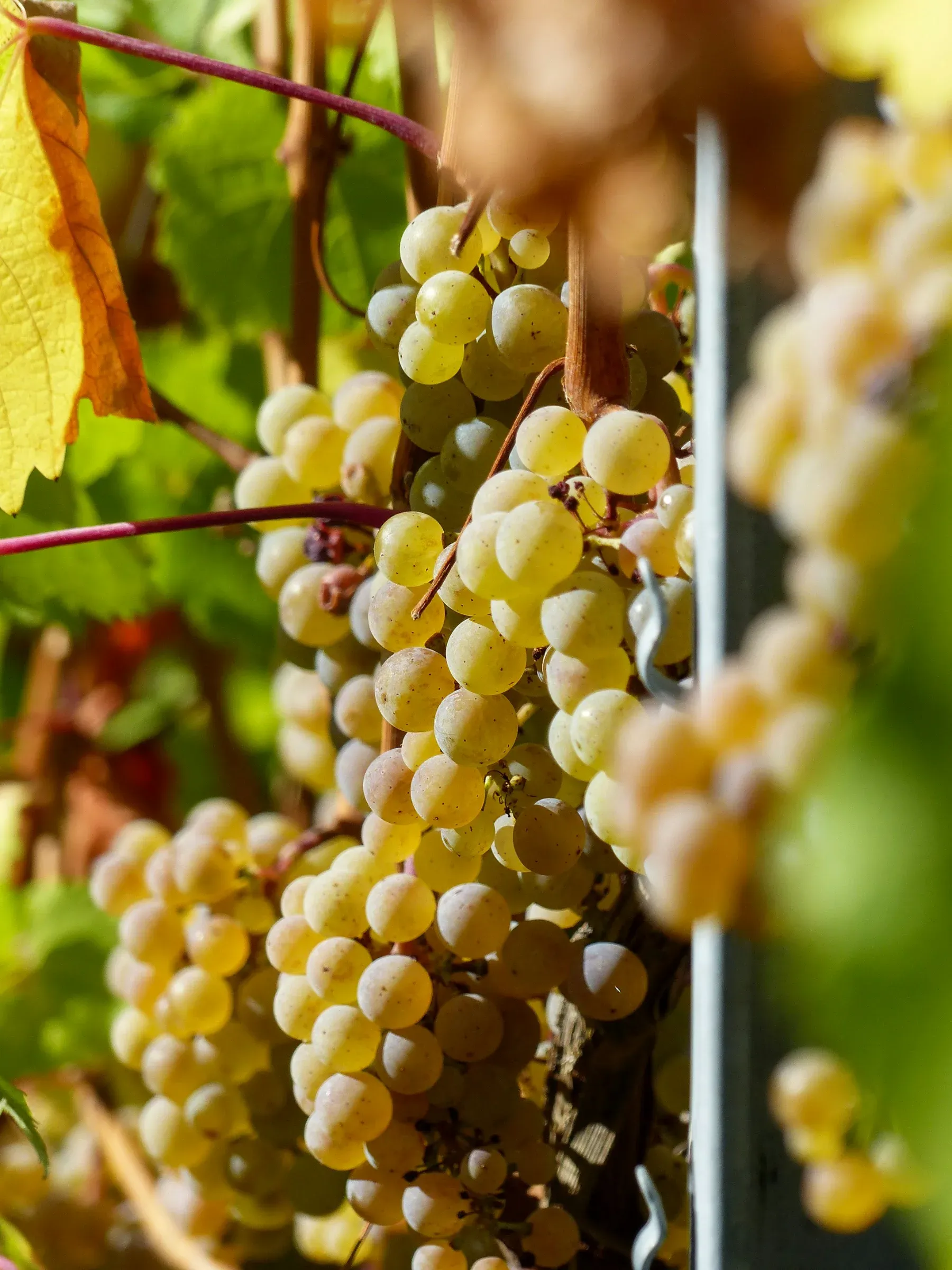
Riesling is one of the world’s great white grapes, known for its high acidity, fresh aromas, and its ability to show the character of the place where it grows.
It originated in Germany along the Rhine and Mosel rivers and now grows in many cool-climate regions such as Austria, Alsace, Australia, New Zealand, and North America.
Riesling can make wines from bone-dry to lusciously sweet, but all share bright fruit, low alcohol, and great ageing potential.
2. Grape Characteristics
| Feature | Description |
|---|---|
| Colour | White |
| Ripening | Late; needs a long, cool season |
| Acidity | Very high |
| Aromas | Lime, green apple, peach, jasmine; honey and petrol with age |
| Body | Light to medium |
| Alcohol | Usually 11–13 % |
| Ageing | Excellent – can last decades in bottle |
3. Major Regions and Styles
Germany
The homeland of Riesling, with famous regions such as Mosel, Rheingau, Pfalz, Nahe, and Rheinhessen.
- Climate: Cool continental; steep, sunny river valleys help grapes ripen.
- Soils: Slate, sandstone, and limestone.
- Styles: From light, off-dry Kabinett wines to rich, sweet Auslese and dry Grosses Gewächs.
- Flavours: Green apple, citrus, floral notes; delicate, pure, and mineral.
Austria
Mainly grown in Wachau, Kamptal, and Kremstal.
- Climate: Warm days, cool nights; moderate rainfall.
- Soils: Gneiss, granite, and loess.
- Styles: Always dry, showing riper fruit – peach and apricot – with firm acidity and a clean, mineral finish.
Alsace (France)
Along the Vosges Mountains, producing dry, aromatic Rieslings.
- Climate: Sunny and dry, with many different soil types.
- Styles: Full-bodied, dry, and ageworthy, with citrus, blossom, and a stony character.
- Special Wines: Late-harvest Vendange Tardive and Sélection de Grains Nobles for sweet styles.
Australia
Best known in Clare Valley and Eden Valley.
- Climate: Warm days, cool nights.
- Styles: Bone-dry, unoaked, with flavours of lime, green apple, and wet stone.
- Ageing: Develops honeyed, toasty notes with time.
New Zealand
Found in Marlborough and Central Otago.
- Climate: Cool and sunny with strong day–night temperature swings.
- Styles: From very dry to lightly sweet; crisp and aromatic, with lime and floral tones.
North America
Best examples come from the Finger Lakes (New York), Washington State, and Canada’s Okanagan Valley.
- Climate: Cool, with long autumns and big diurnal ranges.
- Styles: Usually off-dry to dry, with juicy citrus and peach flavours balanced by lively acidity.
4. Winemaking
Riesling is mostly fermented in stainless steel or large old oak vats to keep freshness.
Malolactic fermentation is rarely used, preserving the grape’s sharp, clean acidity.
Sweet wines are made from late-harvested or botrytised grapes, or by freezing the fruit for Eiswein.
5. Typical Flavours by Style
| Style | Taste | Example Regions |
|---|---|---|
| Dry | Lime, green apple, mineral; crisp and zesty | Austria, Australia, Alsace |
| Off-Dry / Medium | Peach, citrus, floral; balance of sweetness and acidity | Mosel, Rheingau, New Zealand |
| Sweet | Honey, apricot, marmalade; luscious texture | Mosel (BA/TBA), Alsace (VT/SGN), Canada (Icewine) |
6. Key Producers
Germany: Egon Müller, JJ Prüm, Markus Molitor, Keller, Dönnhoff, Dr. Loosen
Austria: FX Pichler, Knoll, Bründlmayer, Schloss Gobelsburg
Alsace: Trimbach, Zind-Humbrecht, Weinbach
Australia: Grosset, Pewsey Vale, Henschke, Jim Barry
New Zealand: Framingham, Pegasus Bay
North America: Eroica (Chateau Ste. Michelle × Dr. Loosen), Hermann J. Wiemer, Tantalus
7. Summary
Riesling thrives in cool climates and produces wines that are bright, pure, and full of character.
Its acidity gives balance to both dry and sweet styles, and its flavours change beautifully as it ages.
From the steep slate slopes of the Mosel to the sunny hills of Australia, Riesling shows why it is considered one of the world’s finest white grapes.
Check your knowledge
Enthusiast quiz