Pinot Gris/Grigio
Pinot Gris
1. Overview
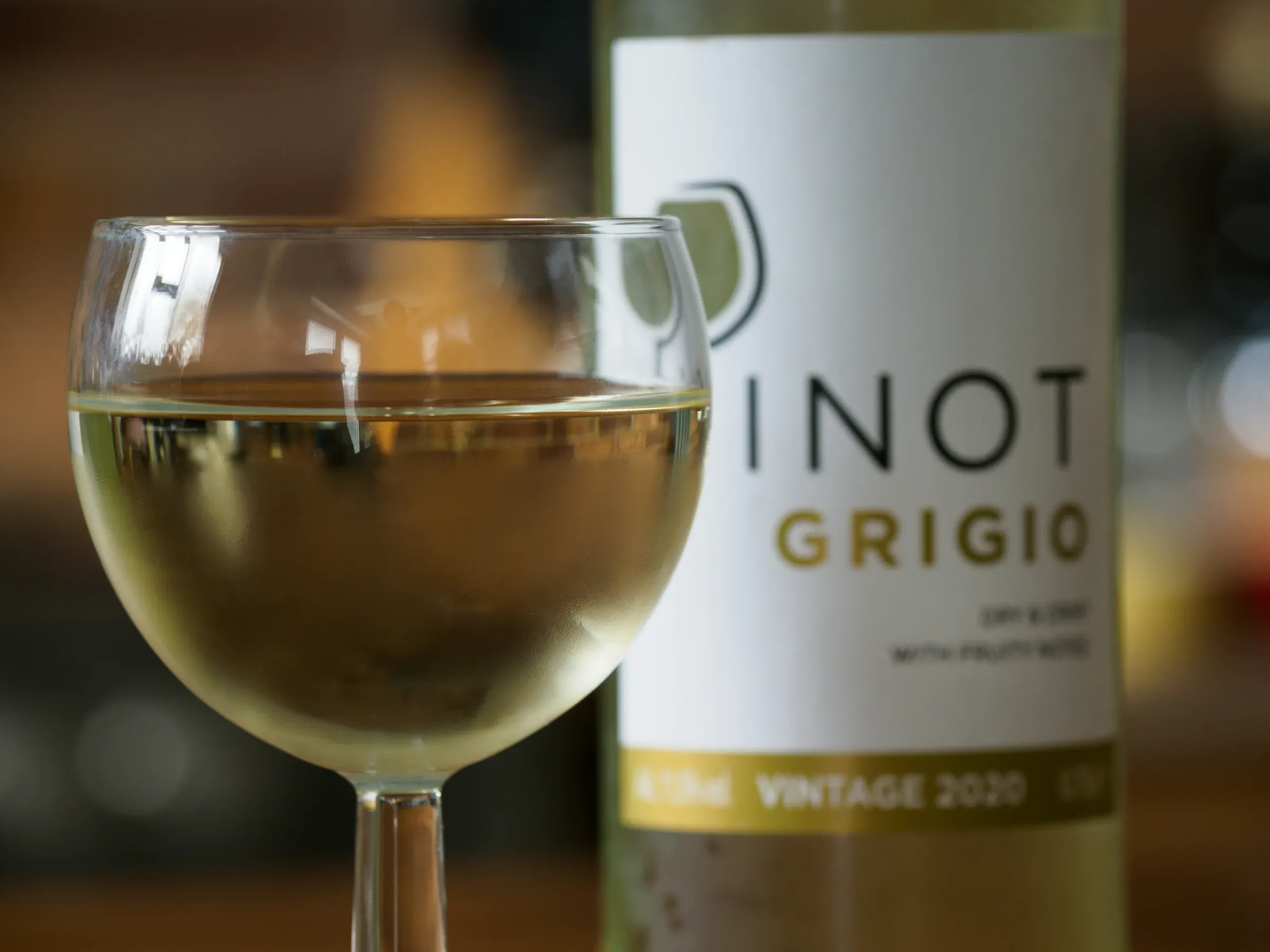
Pinot Gris is a white grape from the Pinot family, a natural mutation of Pinot Noir that develops gray-pink skins.
It has a dual identity: Pinot Gris (used in France, Germany, and New-World regions for richer, textural wines) and Pinot Grigio (Italy’s name for lighter, crisp styles).
Because of its moderate acidity and ability to accumulate sugar, it can create wines ranging from bright and citrusy to spicy, honeyed, and full-bodied.
2. Grape Characteristics
| Parameter | Pinot Gris |
|---|---|
| Colour | White (gray-pink skins) |
| Budding / Ripening | Early bud; mid to late ripening |
| Vigour & Yield | Moderate; prone to high yields if not controlled |
| Disease Sensitivity | Susceptible to botrytis and rot; frost-sensitive |
| Preferred Soils | Calcareous, clay-limestone, loess, volcanic slopes |
| Vine Traits | Compact bunches; may show copper tint with skin contact |
| Wine Traits | Pear, melon, spice, honey; acidity medium–high (cool sites) to low (warm); dry to sweet styles |
3. Major Growing Regions and Styles
France – Alsace
- Area: ~2,600 ha; second most planted white after Riesling
- Climate: Semi-continental, sheltered by Vosges; 500–600 mm rain
- Soils: Marl, sandstone, volcanic, granite, clay-limestone
- Style: Dry → off-dry, rich, spicy, sometimes smoky; can be Vendange Tardive or Sélection de Grains Nobles sweet wines
- Key producers: Zind-Humbrecht • Trimbach • Domaine Weinbach • Hugel • Schlumberger
Italy – Trentino-Alto Adige, Friuli, Veneto
- Area: > 24,000 ha (Italy’s most planted white)
- Climate: Alpine north to Mediterranean plains; 700–1,000 mm rain
- Soils: Limestone, marl, gravel, alluvial
- Style: Pinot Grigio – dry, crisp, unoaked; lemon, green apple; 12–13 % ABV
- Trend: Revival of ramato copper-hued, short skin-contact wines
- Producers: Livio Felluga • Jermann • Alois Lageder • Tiefenbrunner • Santa Margherita
Germany – Grauburgunder / Ruländer
- Area: ~7,000 ha (Baden, Pfalz, Rheinhessen, Mosel)
- Style: Mostly dry; apple, almond, mineral; medium body; 12.5–13.5 % ABV
- Ruländer historically sweet; Grauburgunder now dry, terroir-driven
- Producers: Dr. Bürklin-Wolf • Franz Keller • Markus Schneider • Rebholz
United States – Oregon & California
- Oregon (Willamette): Cool, maritime; 12–13.5 % ABV; pear, melon, spice, light lees texture
- California: Warmer; softer Pinot Grigio style, fruitier, less structured
- Key producers: King Estate • Elk Cove • Ponzi • Eyrie • J Vineyards
Australia & New Zealand
- Australia: ~3,800 ha; Yarra, Mornington, Adelaide Hills, Tasmania – from zesty Grigio to rich Gris
- New Zealand: ~2,500 ha; Marlborough, Nelson, Central Otago – dry, aromatic, pear + ginger notes
- Producers: Shaw + Smith • Yering Station • Kooyong • Greywacke • Peregrine
4. Pinot Gris vs Pinot Grigio
| Attribute | Pinot Gris | Pinot Grigio |
|---|---|---|
| Origin | France (Alsace) | Italy (Northeast) |
| Style Range | Dry → off-dry → sweet | Dry, crisp, light |
| Climate | Cool-continental but sunny | Alpine / coastal |
| Body / Texture | Full, rich, sometimes oily | Light, lean, refreshing |
| Aromas | Ripe pear, honey, spice, smoke | Lemon, apple, almond |
| Winemaking | Often barrel-aged / lees-stirred | Stainless-steel, early bottled |
| Colour | Deep gold / pink tint | Pale straw |
| Sweetness | Occasionally residual sugar | Usually bone-dry |
| Ageing Potential | 5–10 years + | Drink young |
5. Viticulture and Production
- Prefers cool–moderate climates; loses acidity quickly in heat
- Harvest: early for crispness, late for richness or noble rot potential
- Botrytis: common in Alsace; used for sweet wines
- Canopy management: critical for air flow and rot control
- Yields: 40–80 hl/ha; lower for quality
- Skins: pink-gray pigments; short maceration yields copper “ramato” tone
6. Winemaking
- Fermentation: cool / stainless for Grigio; neutral oak + lees ageing for Gris
- Malolactic: partial in Italy; full in Alsace / Oregon for softness
- Sweet wines: late-harvest / botrytised (Alsace)
- Skin-contact: increasingly popular in Friuli “ramato” and natural-wine movements
- Alcohol: 12–14 % depending on region
7. Regional Style Overview
| Region | Style | Flavour Profile | Body / Acidity | Notes |
|---|---|---|---|---|
| Alsace (FR) | Dry → off-dry; sometimes sweet | Pear, honey, smoke, spice | Full / Med-Low | Includes late-harvest wines |
| Italy (Veneto / Friuli) | Dry, crisp | Lemon, apple, almond | Light / Med-High | Unoaked; best young |
| Germany (Grauburgunder) | Dry | Apple, nut, mineral | Medium / Medium | Clean, dry, terroir focus |
| Oregon (USA) | Dry | Pear, melon, gentle spice | Medium / Medium | Textural; food-friendly |
| Australia / NZ | Dry | Citrus, pear, blossom | Medium / Med-High | Mix of Gris richness & Grigio freshness |
8. Leading Producers
Alsace: Zind-Humbrecht • Trimbach • Weinbach • Hugel • Schlumberger
Italy: Livio Felluga • Jermann • Alois Lageder • Tiefenbrunner • Vie di Romans
Germany: Dr. Bürklin-Wolf • Franz Keller • Markus Schneider
Oregon: King Estate • Elk Cove • Ponzi • Eyrie • Cristom
Australia / NZ: Shaw + Smith • Greywacke • Kooyong • Pegasus Bay
9. Modern Trends
- Clear stylistic split: Gris = richer, Grigio = crisper
- German Grauburgunder emerging as serious dry white
- Revival of ramato (copper) styles in Friuli / Slovenia / Oregon
- Natural / low-intervention approaches growing in Alsace & Oregon
- Cooler sites increasingly planted to retain acidity
10. Summary
Pinot Gris is a true shape-shifter: lush and spicy in Alsace, crisp and citrusy in Italy, and balanced and textural in Oregon or Germany.
A genetic twin of Pinot Noir, it mirrors its terroir with precision — producing wines that range from breezy aperitifs to structured, ageworthy whites.
Its adaptability and global appeal make it one of the most expressive and international white grapes in modern wine.
Check your knowledge
Expert quiz