Pinot Gris/Grigio
Pinot Gris
1. Overview
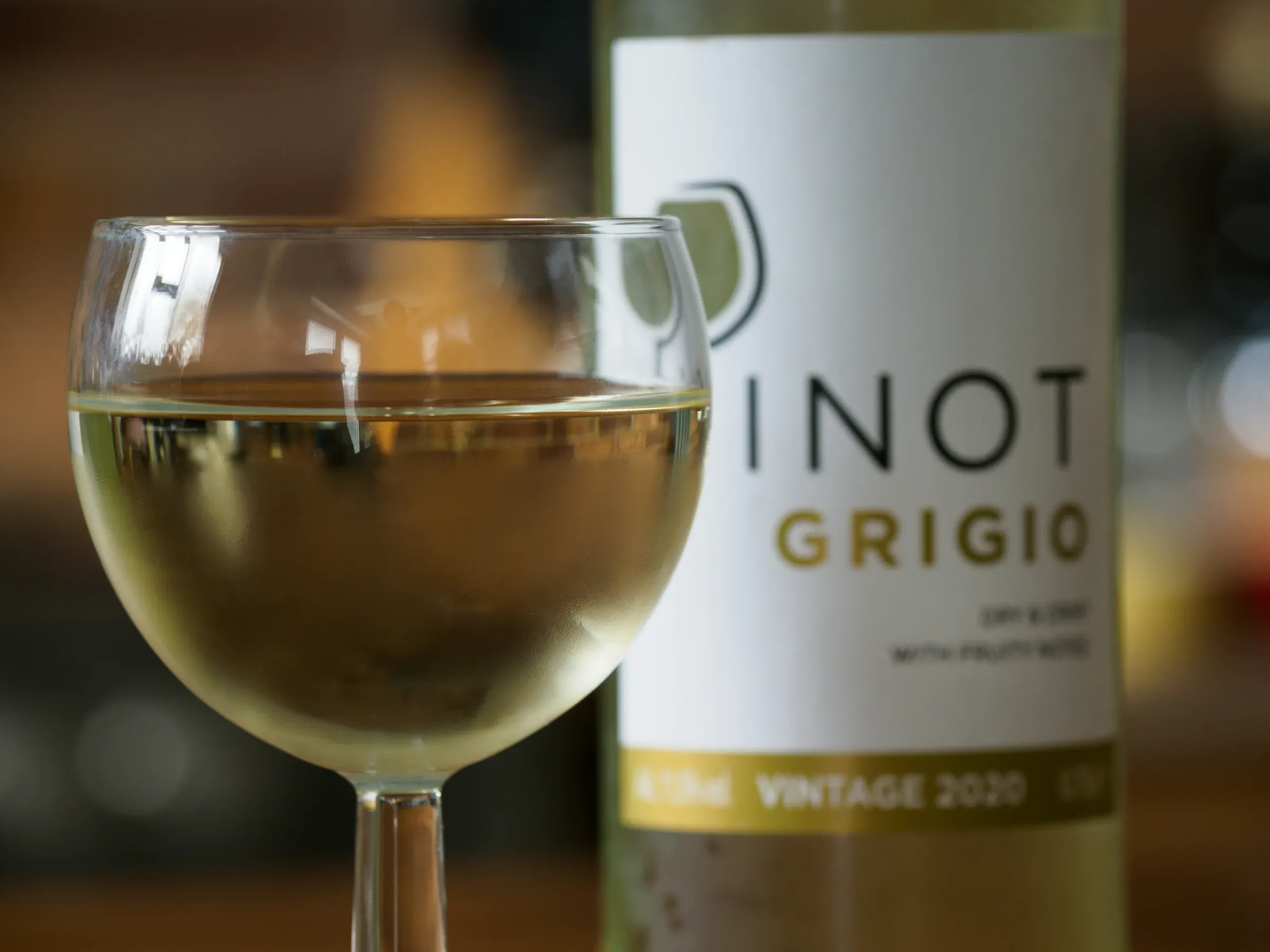
Pinot Gris is a white grape variety that is actually a mutation of Pinot Noir, giving it a slight pink-gray skin colour.
It’s known for being a shape-shifter: in France and the New World, it’s called Pinot Gris and tends to be rich and textural; in Italy, it’s Pinot Grigio and usually light and crisp.
Because it keeps good acidity but can also build ripeness, it makes a wide range of wines — from fresh and zesty to aromatic and full-bodied.
2. Grape Characteristics
| Feature | Description |
|---|---|
| Colour | White with pink-gray skins |
| Acidity | Medium to medium-high |
| Body | Light to full, depending on climate and style |
| Flavours | Pear, apple, melon, citrus, and sometimes honey or spice |
| Winemaking Styles | Dry, off-dry, sweet, or sparkling |
| Ageing | Best enjoyed young, but richer styles can age 5–10 years |
3. Main Regions and Styles
France – Alsace
Rich, aromatic, and sometimes lightly sweet.
- Flavours: pear, honey, ginger, and smoke
- Often full-bodied and spicy
- Some wines are Vendange Tardive (late-harvest) or Sélection de Grains Nobles (botrytised sweet)
Italy – Pinot Grigio (Northeast)
Light, clean, and refreshing.
- Flavours: lemon, apple, and almond
- Crisp, unoaked, and best enjoyed young
- Some producers in Friuli make ramato, a pale copper-coloured version with short skin contact
Germany – Grauburgunder
Mostly dry, balanced wines with apple and nut flavours.
- Styles are getting drier and more structured
- Produced in Baden, Pfalz, and Rheinhessen
New World – Oregon, Australia, New Zealand
Modern, fruit-forward styles.
- Oregon: pear, melon, gentle spice, medium body
- Australia/NZ: dry, fresh, with citrus and floral notes
- Often labelled Pinot Gris for richer styles and Pinot Grigio for lighter ones
4. Pinot Gris vs Pinot Grigio
| Aspect | Pinot Gris | Pinot Grigio |
|---|---|---|
| Origin | France (Alsace) | Italy (Northeast) |
| Body | Medium to full, textured | Light, crisp, refreshing |
| Flavours | Ripe pear, honey, spice | Lemon, apple, almond |
| Winemaking | Often lees-aged or partly oaked | Usually stainless steel and unoaked |
| Sweetness | Dry to off-dry or sweet | Generally bone-dry |
| Ageing Potential | 5–10 years | Best young (1–2 years) |
5. Taste and Structure
| Style | Body | Acidity | Common Flavours |
|---|---|---|---|
| Cool Climate (Alsace, Oregon) | Medium–Full | Medium | Pear, honey, spice |
| Warm Climate (Italy, Australia) | Light | Medium–High | Lemon, melon, green apple |
| Sweet (Alsace Late Harvest) | Full | Medium | Honey, peach, apricot |
6. Leading Producers
Alsace: Zind-Humbrecht • Trimbach • Domaine Weinbach
Italy: Livio Felluga • Jermann • Alois Lageder
Germany: Franz Keller • Dr. Bürklin-Wolf
Oregon: King Estate • Elk Cove • Eyrie
Australia / NZ: Shaw + Smith • Greywacke • Pegasus Bay
7. Modern Trends
- Growing use of the Pinot Gris / Grigio distinction on labels to signal style
- Return of traditional ramato copper-coloured wines in Italy and Oregon
- Interest in single-vineyard and organic wines in Alsace and Germany
- New producers experimenting with skin contact and wild fermentation
8. Summary
Pinot Gris is one of the world’s most adaptable grapes, expressing everything from light, crisp Pinot Grigio to rich, spicy Alsace whites.
It reflects its growing region clearly — cool climates bring freshness, warm sites give roundness and fruit.
Whether simple and easy-drinking or complex and textural, it’s always approachable, food-friendly, and expressive of place.
Check your knowledge
Enthusiast quiz