Navarra and Aragón
1. Overview
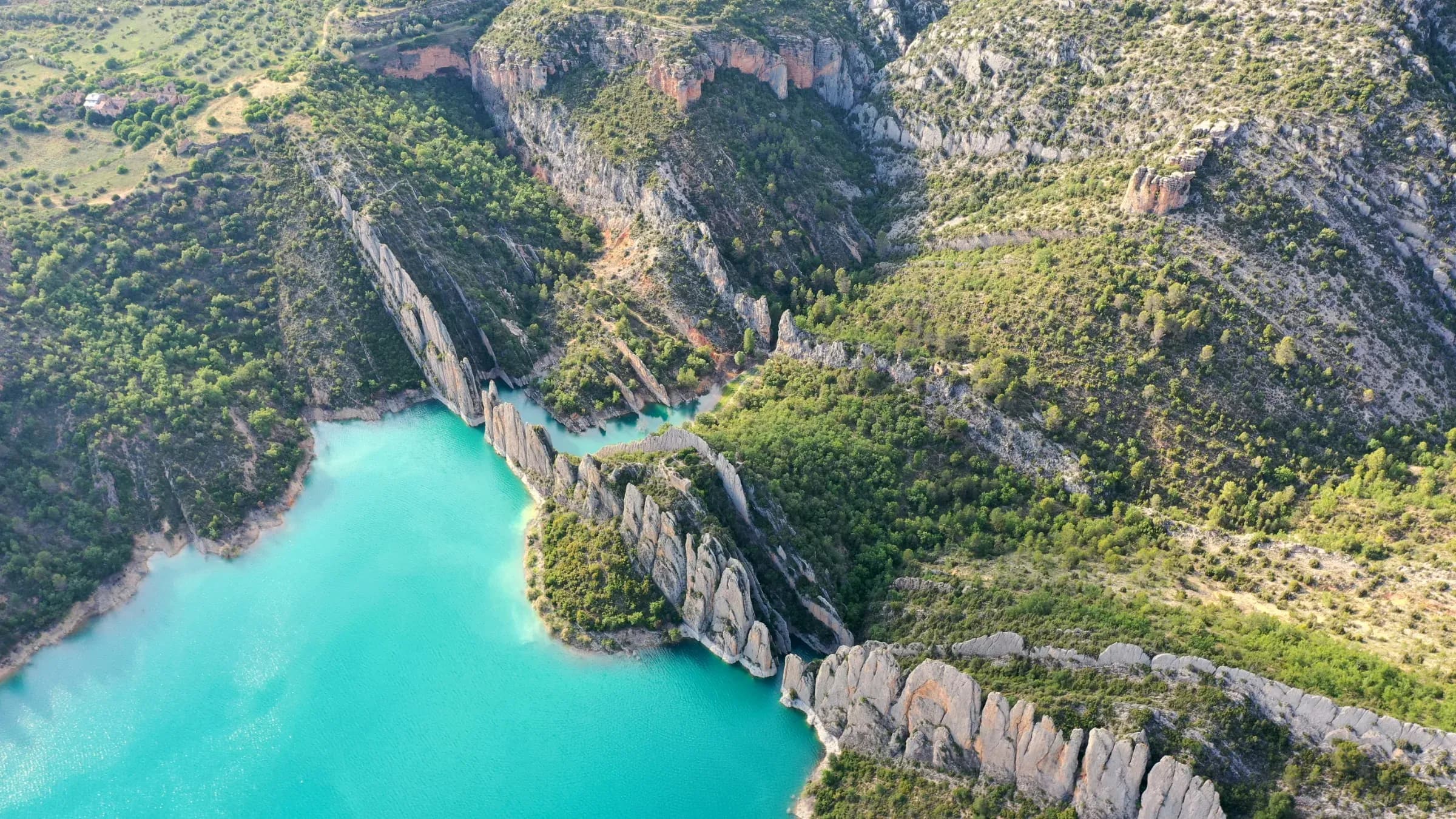
Navarra and Aragón form Spain’s bridge between the Atlantic and the Mediterranean, stretching across the Ebro valley from Rioja to Catalonia.
They share a long history as the homeland of Garnacha (Grenache), producing wines that combine Mediterranean warmth with altitude-driven freshness.
Navarra’s vineyards benefit from Atlantic breezes and limestone soils, while Aragón’s arid, continental zones give dense, mineral reds from old bush-trained vines.
2. Geography and Climate
Navarra
- Area under vine: ~10,000–11,000 ha (varies by register/year)
- Altitude: 300–600 m
- Climate: Transitional; Atlantic in the north, Mediterranean in the south; 400–600 mm rainfall
- Soils: Limestone, clay, gravel on Ebro terraces
- Subzones: Tierra Estella, Valdizarbe, Baja Montaña, Ribera Alta, Ribera Baja
Aragón
- Combined vineyard area: ~28,000 ha across Campo de Borja, Cariñena, Calatayud, Somontano
- Altitude: 200–1,000 m (highest in Calatayud & Somontano)
- Climate: Continental; hot summers, cold winters; Cierzo wind moderates extremes
- Rainfall: Typically 350–500 mm
- Soils: Calcareous, stony, low organic matter; ideal for dry-farmed Garnacha
3. History and Development
Winemaking dates to Roman times and flourished under monasteries along the Camino de Santiago.
Both regions declined under 20th-century cooperatives; since the 1980s, estates such as Chivite (Navarra) and Borsao, Alto Moncayo, Enate (Aragón) have led a quality revival.
Today, old-vine Garnacha and altitude viticulture drive a move from power toward precision and terroir.
4. Grape Varieties
| Variety | Colour | Budding / Ripening | Vigour & Yield | Disease Sensitivity | Preferred Soils | Vine Characteristics | Wine Style & Traits |
|---|---|---|---|---|---|---|---|
| Garnatxa (Garnacha Tinta) | Black | Early bud; late ripening | High; low on old vines | Coulure in cool bloom | Rocky, arid slopes | Thick-skinned; drought tolerant | Red/black fruit, spice, warmth; full body, high alcohol |
| Carinyena (Carignan) | Black | Late bud; late ripening | Moderate | Mildew/rot sensitive | Poor stony soils | Small berries; compact bunches | Deep colour, acidity, tannin backbone |
| Tempranillo | Black | Early bud; early–mid ripening | Moderate | Frost/mildew prone | Clay-limestone | Early ripening | Red fruit, tobacco; balance (key in Navarra) |
| Syrah | Black | Mid; mid-late | Moderate | Sunburn, drought stress | Deep stony soils | Best at altitude | Dark fruit, pepper; supple texture |
| Cabernet Sauvignon | Black | Late | Low on dry soils | Ripening risk at height | Warm gravel terraces | Small berries | Cassis, structure, longevity |
| Merlot | Black | Early; mid | High vigour | Coulure in wet bloom | Moisture-retentive soils | Generous cropper | Plum, soft texture; blending role |
| Viura (Macabeo) | White | Mid; mid-late | Moderate | Botrytis prone | Alluvial | Neutral, adaptable | Crisp apple, floral; whites & rosados |
| Chardonnay | White | Early; mid | Moderate | Frost-sensitive | Limestone-clay | Expressive in cool zones | Peach, citrus; barrel-fermented whites |
| Garnatxa Blanca | White | Early; mid-late | Moderate | Oxidation prone | Calcareous/slatey | Thick skins; high extract | Pear, fennel, honey; textural whites |
| Gewürztraminer (Somontano) | White | Early; mid | Low–moderate | Botrytis risk | Limestone & silt | Aromatic, small berries | Rose, lychee, spice; signature whites |
5. Viticulture and Production Structure
- Old vines: Aragón’s Garnacha often 40–100+ years, bush-trained, dry-farmed
- Navarra’s range: Atlantic freshness (north) + Mediterranean richness (south)
- Irrigation: Limited and regulated
- Average yields: Navarra 40–55 hl/ha; Campo de Borja 30–45 hl/ha; Cariñena 35–50 hl/ha; Calatayud 25–35 hl/ha; Somontano 45–55 hl/ha
- Harvest volumes (Navarra): Typically ~34–56 M kg depending on vintage (e.g., 43 M kg in 2024; 33.7 M kg in 2025, historic low)
- Sustainability: Broad adoption of organics; altitude leveraged to preserve acidity
6. Winemaking
- Navarra: Benchmark dry rosado (short maceration Garnacha); increasing share of refined reds
- Aragón: Structured old-vine Garnacha/Carinyena; trend to freshness with concrete, foudre, amphora
- Common practices: stainless-steel ferments; French oak (225–500 L) replacing American; partial whole-cluster; MLF in oak for reds; typical ageing Crianza 12–14 months, Reserva up to 24 months
7. Regional Profiles
Navarra DO
Diverse terroirs spanning Atlantic, continental, and Mediterranean influences.
- Rosado: Dry, crisp, Garnacha-based (benchmark)
- Reds: Tempranillo & Garnacha blends; medium-bodied, spicy, balanced
- Whites: Viura & Chardonnay; fresh, sometimes barrel-fermented
Producers: Chivite • Ochoa • Artazu (Artadi) • Otazu • Inurrieta • Tandem
Campo de Borja DO
“Empire of Garnacha.”
- Altitude: 350–700 m; very dry continental climate
- Style: Old bush vines; ripe yet fresh reds
Producers: Borsao • Alto Moncayo • Coto de Hayas
Cariñena DO
One of Spain’s oldest DOs (1932).
- Altitude: 400–800 m; stony, calcareous soils
- Style: Garnacha & Carinyena; firm, structured reds
Producers: Grandes Vinos • Paniza • San Valero
Calatayud DO
Highest of Aragón’s DOs.
- Altitude: 550–1,000 m; extreme diurnals (up to 25 °C)
- Style: Ancient mountain Garnacha; concentrated fruit, lively acidity, mineral lift
Producers: Ateca • Breca • El Escocés Volante • Frontonio
Somontano DO
At the Pyrenean foothills around Barbastro.
- Altitude: 350–1,000 m; limestone-clay soils
- Style: Modern mix of local/international grapes; aromatic whites (Gewürztraminer, Chardonnay) and balanced reds (Tempranillo, Cabernet)
Producers: Enate • Viñas del Vero • Laus • Pirineos
8. Styles and Sensory Profile
- Navarra rosado: Pale to light ruby; strawberry, cherry, floral; dry, refreshing
- Navarra reds: Medium body; red fruit, spice; moderate oak
- Aragón Garnacha: Dark ruby; blackberry, licorice, pepper; full body, soft tannin
- Calatayud/Cariñena reds: Deeper colour, firmer structure, mineral edge
- Somontano whites: Aromatic, tropical-tinged; reds smooth, fruit-forward, often oak-aged
9. Key Producers
Navarra: Chivite • Ochoa • Artazu • Bodega Otazu • Inurrieta • Tandem • Pago de Arínzano
Aragón: Borsao • Alto Moncayo • Ateca • Breca • El Escocés Volante • Frontonio • Enate • Viñas del Vero • Laus
10. Modern Trends
- Old-vine Garnacha renaissance: re-valuing pre-war vineyards & altitude sites
- Shift to balance: less extraction, lower alcohol, finer tannins
- Altitude exploration: 700–1,000 m sites to retain freshness
- Rosado revival: Navarra leads dry, gastronomic styles
- Sustainability: organic farming and precision water use expanding
11. Production Overview
| Region | Vineyard Area | Main Grapes | Altitude | Climate | Typical Yields | Key Styles |
|---|---|---|---|---|---|---|
| Navarra | ~10,000–11,000 ha | Garnatxa, Tempranillo, Cabernet | 300–600 m | Atlantic–Mediterranean | 40–55 hl/ha | Rosado, elegant reds |
| Campo de Borja | ~6,800 ha | Garnatxa | 350–700 m | Continental, dry | 30–45 hl/ha | Rich, balanced reds |
| Cariñena | ~14,500 ha | Garnatxa, Carinyena | 400–800 m | Continental | 35–50 hl/ha | Firm, spicy reds |
| Calatayud | ~3,500 ha | Garnatxa | 550–1,000 m | Continental, arid | 25–35 hl/ha | Concentrated mountain reds |
| Somontano | ~4,000 ha | Tempranillo, Cabernet, Gewürztraminer | 350–1,000 m | Continental–Pyrenean | 45–55 hl/ha | Modern reds, aromatic whites |
Note: DO yield maxima typically 7,000–8,000 kg/ha (reds/whites) with ~70% juice yield; actual outputs often below these limits.
12. Summary
Navarra and Aragón showcase the versatility of Spain’s northeast, where Garnacha is both heritage and future.
Navarra balances Atlantic freshness with Mediterranean fruit to craft poised rosados and refined reds, while Aragón’s higher, harsher slopes deliver concentrated yet increasingly elegant Garnachas.
From Calatayud’s mountain vineyards to Somontano’s aromatic whites, these regions reflect Spain’s evolution toward wines of clarity, identity, and place.
Check your knowledge
Expert quiz