Jerez
Jerez–Xérès–Sherry DO — The Architecture of Flor, Chalk, and Time
1. Overview
The Jerez–Xérès–Sherry DO, located in Cádiz, Andalusia, is one of the world’s most distinctive and historically important wine regions.
Defined by the “Sherry Triangle” — Jerez de la Frontera, Sanlúcar de Barrameda, and El Puerto de Santa María — it produces biologically aged, oxidatively aged, hybrid, and naturally sweet wines of remarkable complexity.
Three elements define Sherry’s identity:
- Albariza soils (chalk-rich, moisture-retentive)
- Flor yeast (biological ageing)
- Solera system (fractional blending and long ageing)
Together, they create wines that range from the bone-dry, saline Fino and Manzanilla to the deep oxidative complexity of Oloroso, the hybrid elegance of Amontillado and Palo Cortado, and the unctuous sweetness of PX and Moscatel.
2. History & Context
Viticulture in Jerez dates back over 3,000 years to Phoenician settlements, with further consolidation under Roman rule.
The Moors introduced distillation techniques that later shaped Sherry’s fortified character.
From the 16th to the 19th century, British merchants established Sherry as one of the world’s most influential export wines, encouraging oxidative ageing and the rise of large solera systems.
After a period of industrial decline in the late 20th century, Jerez is experiencing a renaissance, driven by:
- En rama releases
- Single-vintage and single-pago bottlings
- Revival of almacenistas (independent ageing houses)
- Terroir-led unfortified Palomino wines (Ramiro Ibáñez, Willy Pérez)
3. Geography & Climate
Climate
Jerez’s climate is Mediterranean with strong Atlantic influence:
- Poniente wind: cool, humid, moderates temperatures → ideal for flor
- Levante wind: hot, dry, increases evaporation → oxidative concentration
- Rainfall: ~600 mm annually, concentrated in winter
- Summers: hot, nearly rainless
- Humidity: critical for flor survival in Jerez and Sanlúcar bodegas
Albariza Soils
Albariza is essential for Sherry’s identity. This bright-white, chalk-rich soil has extraordinary water-holding capacity — crucial for dry summers.
Key subtypes:
- Tosca cerrada: compact, slow water release; structured wines
- Tosca de barajuela: laminated chalk layers; highly prized; fine, high-acid musts
- Lentejuelas: softer, lighter; more aromatic styles
- Tosca blanca: pure chalk, very fine texture; saline wines
Pagos (cru-like vineyard zones)
Notable pagos include Macharnudo, Carrascal, Miraflores, Balbaína, Añina, Callejuela, and Pastora — each with unique chalk structures, moisture retention, and exposure to Poniente and Levante.
4. Grapes (with Skin Thickness & Hazards)
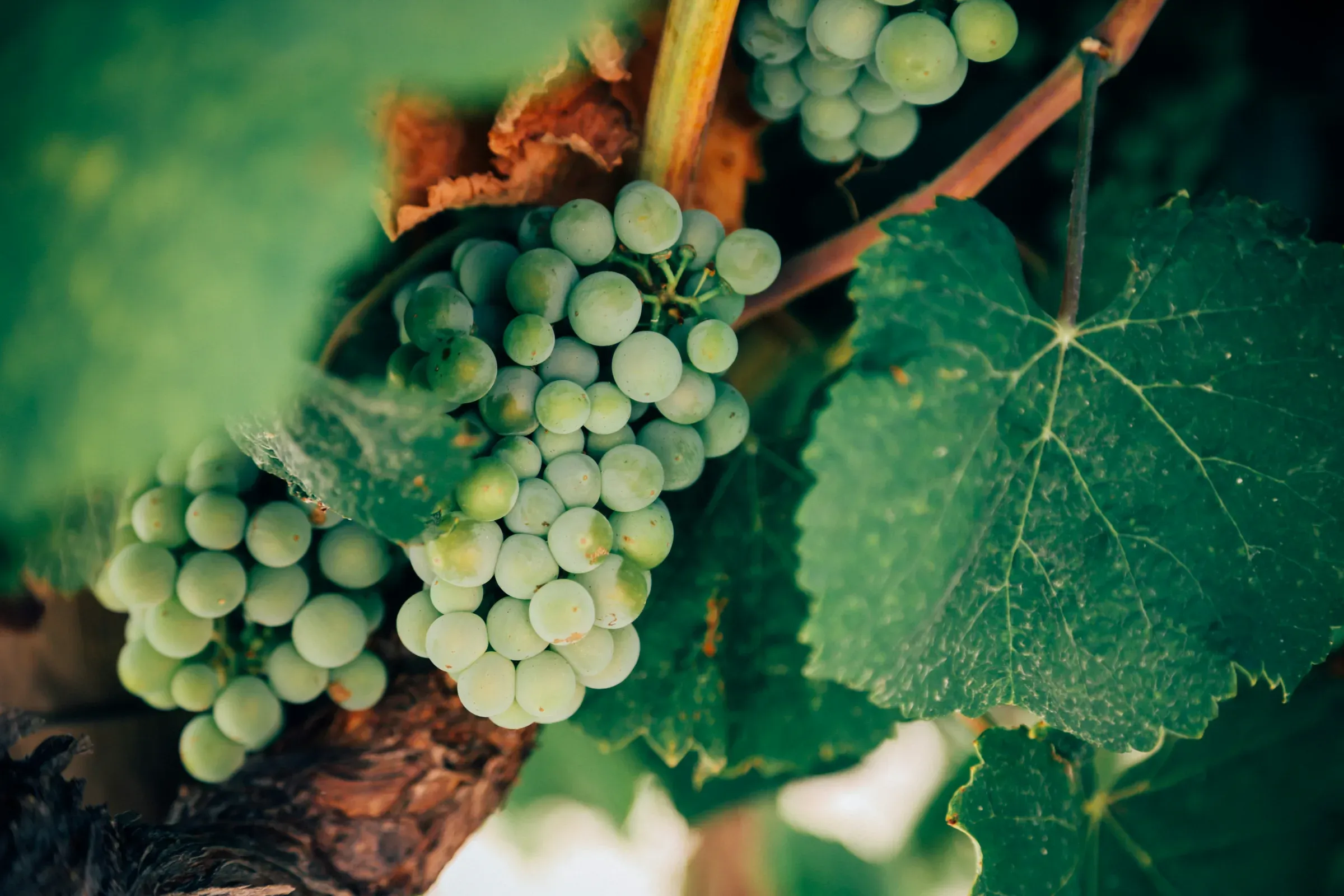
Palomino Fino
- Colour: White
- Skin Thickness: Thin
- Budding/Ripening: Early bud; mid ripening
- Soils: Albariza (best on barajuela/tosca cerrada)
- Traits: Neutral aromatics; ideal for flor; expresses pago differences clearly
- Hazards: Sunburn, wind damage, drought stress, mildew in humid pockets
Pedro Ximénez (PX)
- Skin Thickness: Thin–medium
- Traits: High sugar; used for sun-dried PX wines
- Hazards: Botrytis in humid conditions
- Note: Now mostly grown in Montilla-Moriles, shipped to Jerez for ageing
Moscatel
- Skin Thickness: Thin
- Traits: Highly aromatic; orange blossom, floral
- Hazards: Sunburn, rot
- Grown mainly near Chipiona on sandy soils
5. Viticulture
- Dry farming reliant on albariza’s winter water storage
- Aserpiado (furrow-making) to maximise moisture capture
- Pruning: Vara y pulgar (one cane, one spur) to balance vigour
- Asoleo (sun drying) for PX and Moscatel
- Vineyards closer to the coast favour finer, flor-friendly base wines; inland sites yield fuller musts for oxidative styles
6. Winemaking — The Sherry Architecture
A. Base Wine Production
- Palomino fermented dry to ~11–12% ABV
- Extremely low-aroma, neutral profile
- Gentle pressing to avoid phenolics
B. Fortification
- Fino & Manzanilla: fortified to 15.0–15.4% → flor forms
- Oloroso: fortified to 17–18% → flor cannot form
- Amontillado / Palo Cortado: begin biologically, then switch to oxidative ageing
7. The Solera System — Deep Expert Explanation
The solera system is Sherry’s defining ageing method: a dynamic, fractional-blending architecture producing style, complexity, and stability.
Structure
- Barrels (botas) arranged in tiers: solera (oldest wine) + multiple criaderas (progressively younger wines)
- Withdrawals (sacas) made from the solera are replaced by wine from the first criadera, and so on up the chain
- Legal annual withdrawal limit: 40% of the solera level
- Barrels filled 5/6 full to allow oxygen or flor development
What Solera Achieves
- Consistency: each bottled wine is a blend of many vintages
- Complexity: layering of oxidative, biological, and micro-oxidative influences
- Flor maintenance: regular feeding cycles sustain flor in biological soleras
- Terroir of the bodega: humidity, temperature, airflow matter as much as vineyard terroir
- Time compression: average age grows slowly but complexity increases exponentially
VOS/VORS
- VOS: average age 20+ years
- VORS: average age 30+ years
- Verified analytically and through traceable sacas
8. Comparing Solera Sherry With Other Flor/Oxidative Wines
Vin Jaune (Jura)
- Flor (voile): Yes
- Solera: No
- Fortification: No
- Static ageing: 6+ years in barrel
- More oxidative, curry/nut aromas
- Single-vintage identity
Contrast:
Sherry = flor + solera + fortification + albariza
Vin Jaune = voile only, no solera, no fortification
Madeira
- Flor: No
- Solera: Rare
- Fortification: Yes
- Oxidative ageing via heat (canteiro or estufagem)
- Caramelised, cooked-fruit character
Vernaccia di Oristano (Sardinia)
- Some flor-like ageing
- Often fortified
- Solera-like systems sometimes used
- Style sits between Oloroso and Amontillado
Tokaji Szamorodni (Dry)
- Occasional veil development
- No fortification or solera
- Nutty, lightly oxidative profile
Rancio wines (Catalonia, Roussillon)
- Pure oxidative ageing
- No flor or solera
- Intense aldehydic character
9. Sherry Styles
Biological Ageing
Fino (Jerez):
- Flor-protected
- Almond, green apple skin, bread dough, acetaldehyde
- 4–7 years average ageing
Manzanilla (Sanlúcar):
- Fino aged by the sea
- More delicate, floral, saline
- Manzanilla Pasada: older, lightly oxidative edges
Hybrid Styles
Amontillado:
- Starts as Fino; finishes oxidatively
- Hazelnut, citrus peel, saline length
Palo Cortado:
- Rare, spontaneously developing style
- Aromatic finesse of Amontillado + structure of Oloroso
Oxidative Ageing
Oloroso: walnut, leather, toffee, dried citrus; rich and full-bodied
Naturally Sweet Sherries
PX: raisin, fig, molasses, chocolate
Moscatel: orange blossom, caramel
Blended Styles
- Pale Cream: lightly sweetened Fino
- Medium: often Amontillado with PX
- Cream: sweetened Oloroso
En Rama
Minimal filtration; intense, textured, terroir-forward biological wines.
10. DO Rules & Age Classifications
- Ageing must occur within the Sherry Triangle
- Minimum total ageing: 2 years (most wines far exceed this)
- 500–600 L American oak botas; never filled to the top
- Fino can only be labelled Manzanilla if entirely aged in Sanlúcar
- VOS/VORS require official certification for age and traceability
11. Key Producers (embedded examples)
- González Byass (Tío Pepe, Palmas series, Viña AB)
- Valdespino (Inocente, Macharnudo pago releases)
- Equipo Navazos (La Bota series)
- Hidalgo-La Gitana (Manzanilla)
- Barbadillo (Manzanilla Pastora, Solear)
- El Maestro Sierra (traditional oxidative styles)
- Cota 45 (Ramiro Ibáñez) and Willy Pérez (terroir-driven Palomino)
12. Wines to Seek Out
- Tío Pepe En Rama
- Valdespino Inocente Fino (Macharnudo)
- La Gitana Manzanilla
- Barbadillo Manzanilla Pastora
- Equipo Navazos La Bota series
- El Maestro Sierra Amontillado VORS
- González Byass Apostoles Palo Cortado
- Any PX VORS
13. Visiting the Region
- Jerez: cathedral-like bodegas, albero floors, towering soleras
- Sanlúcar: sea breezes, Manzanilla bodegas, Bajo de Guía seafood
- El Puerto: humid microclimate favouring fuller Finos
- Gastronomy: jamón ibérico, fried fish (pescaito), gambas, almonds, tuna
14. Modern Trends
- Pago-specific biological Sherries
- Unfortified Palomino wines (vino de pasto)
- Growth of en rama as a quality benchmark
- Return of almacenistas
- Climate concerns affecting flor stability and ageing conditions
- Rising focus on barajuela-driven terroir wines
15. Summary
Sherry merges chalk, climate, flor, and the solera system into one of the world’s most intricate styles of wine.
Its range — from saline Manzanilla to profound VORS Amontillado, Oloroso, and PX — reflects centuries of adaptation and mastery.
Today’s revival, driven by terroir bottlings and en rama authenticity, marks a new golden age for Andalusia’s great wines.
Check your knowledge
Expert quiz