Chardonnay
Chardonnay: Viticulture, Winemaking, Regions & Styles
1. Global Importance and Identity
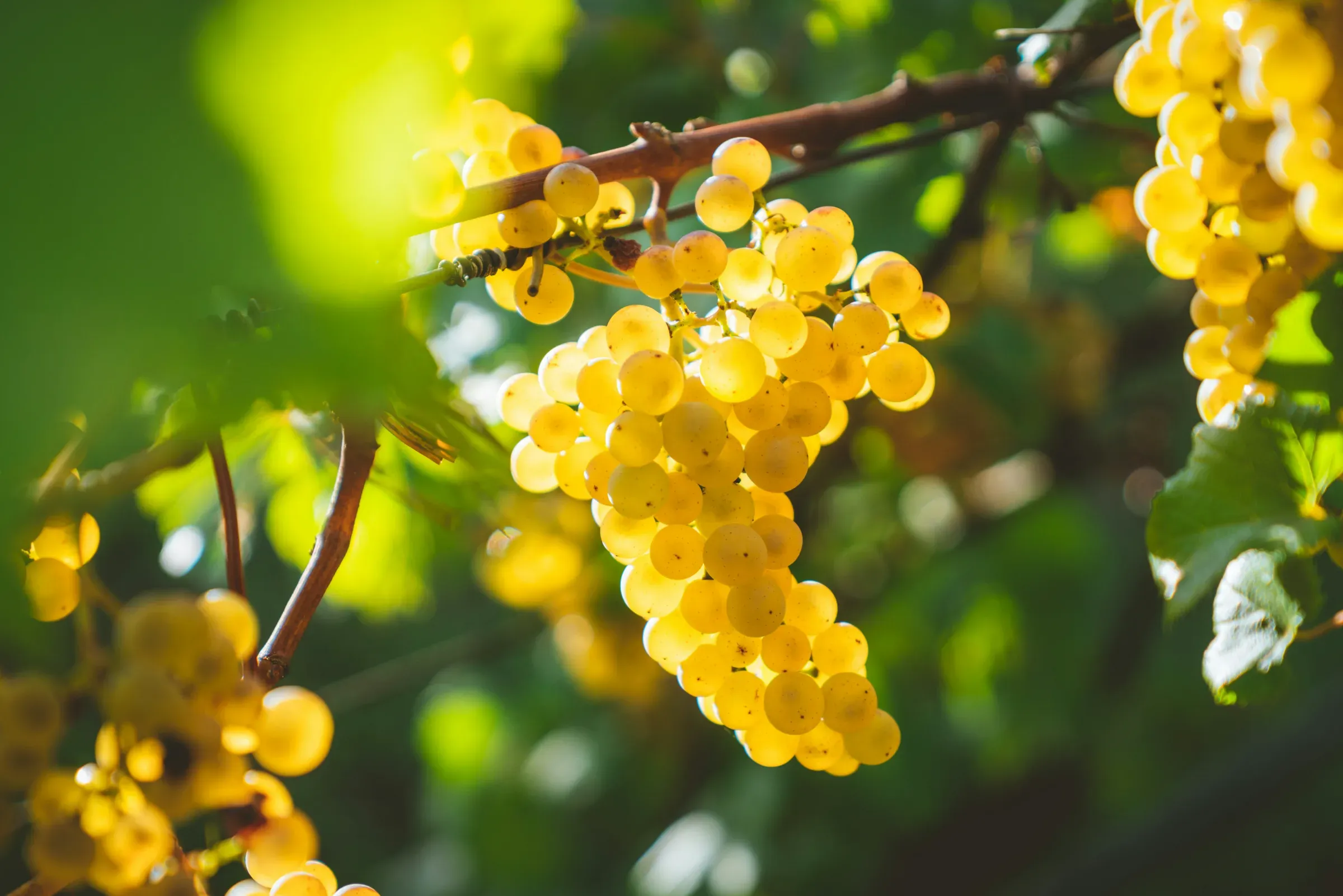
Chardonnay is one of the world’s most planted and adaptable white grape varieties, covering ~211,000 ha globally (OIV 2023).
Native to Burgundy, it now thrives from cool coastal regions to warm Mediterranean valleys, producing everything from flinty, unoaked whites to sumptuous barrel-fermented wines and traditional-method sparkling bases.
Its neutral fruit profile makes it a true winemaker’s grape — highly responsive to site and technique — and also the reason for its polarising reputation: loved for diversity, disliked when stylistically overworked.
2. Phenology, Ripening Window, Best Conditions & Hazards
- Budburst: early → highly frost-sensitive.
- Ripening: early to mid-season, typically 140–150 days from budburst to harvest (around 2–3 weeks earlier than Pinot Noir).
- Optimal temperature: 13–18 °C growing-season average; excels where summers are long and steady.
- Ideal soils: limestone, marl, and chalk for tension; clay and volcanic soils for weight and roundness.
- Hazards: spring frost, coulure, botrytis (undesirable in dry wines), sunburn and acid loss in hot years.
- Best conditions: cool–moderate climates with good diurnal range and steady autumns for slow flavour development.
3. Vineyard Management
- Training: Guyot and cordon in Europe; VSP trellising globally.
- Density: 8 000–10 000 vines/ha in Burgundy; 3 000–5 000 vines/ha in New World regions.
- Canopy: moderately open; leaf removal on the shaded side only.
- Clones: Dijon 76, 95, 96 favoured for balance; UC Davis clones common in warmer climates.
- Rootstocks: low-vigour in fertile soils; drought-resistant in warm sites.
4. Regional Yield Laws and Practices
| Region / Appellation | Legal Max (hL/ha) | Typical Premium Range | Notes |
|---|---|---|---|
| Burgundy (Regional) | 60 | 40–50 | Bourgogne Blanc, Mâconnais. |
| Burgundy (Village / Premier Cru) | 45–50 | 35–40 | Côte d’Or, Côte Chalonnaise. |
| Burgundy (Grand Cru) | 40 | 25–35 | Montrachet, Corton-Charlemagne. |
| Chablis AOC | 60 | 45–50 | Petit Chablis / Chablis Grand Cru ≈ 40. |
| Champagne (base wine) | ≈ 100 (15 500 kg/ha) | 85–95 | Blanc de Blancs; annual Comité Champagne setting. |
| Franciacorta (Italy) | 95 | 70–80 | Traditional-method sparkling; 18 mo lees min. |
| Langhe DOC (Italy) | 63 | 35–45 | Piemonte; often barrel-fermented. |
| Trentino DOC (Italy) | 84 | 55–65 | Still & Trentodoc sparkling. |
| California (AVA) | — | 35–60 | No legal cap; producer-managed. |
| Australia (Margaret River / Adelaide Hills) | — | 40–55 | Self-regulated for balance. |
| New Zealand (Marlborough / Hawke’s Bay) | — | 45–55 | Moderate yields preserve acidity. |
(INAO, BIVB, Comité Champagne, Consorzio Franciacorta, CREA, Wine Australia, Wine Institute 2023–24.)
5. Winemaking Techniques and Style Spectrum
A. Unoaked / Minimalist
Stainless steel or neutral oak; partial or no MLF; 4–12 mo lees ageing → linear, high-acid, mineral (lemon, green apple, flint).
Regions: Chablis, Mâcon-Villages, Trentino-Alto Adige, Casablanca (Chile), Elgin (South Africa).
B. Moderately Oaked / Balanced
Split fermentation (steel + oak); 10–25 % new oak; bâtonnage for texture → citrus, peach, light toast.
Regions: Mâconnais, Friuli VG, Sonoma Coast, Marlborough.
C. Fully Oaked / Premium
Barrel fermentation 10–20 mo; 25–100 % new oak; full MLF → ripe stone fruit, hazelnut, vanilla.
Regions: Meursault, Puligny-Montrachet, Napa, Margaret River, Langhe.
D. Bulk / Commercial
Mechanised harvest, cultured yeasts, oak chips, early bottling → soft, low-acid, “buttery” or vanilla.
Regions: Languedoc, Central Valley (CA/Chile), Riverina.
E. Sparkling Base
Early harvest (10–10.5 % ABV); gentle pressing, neutral ferment → linear, citrus-driven base.
Regions: Champagne, Franciacorta, England, Tasmania, Trentodoc.
6. Geography & Expressions
France
- Chablis: cool, Kimmeridgian limestone; unoaked, saline precision.
- Côte de Beaune (Meursault, Puligny-, Chassagne-Montrachet): limestone-clay; nutty, creamy, structured.
- Côte Chalonnaise (Mercurey, Rully): lighter, fruitier, value-driven.
- Mâconnais (Viré-Clessé, Pouilly-Fuissé): ripe, floral, moderate oak.
- Champagne: early-picked, high acid; foundation of Blanc de Blancs and blending component.
- Jura: oxidative sous voile and fresh ouillé styles.
- Loire: component in Crémant de Loire blends.
Italy
≈ 20–22 k ha planted; vital for still and sparkling wines.
- Trentino-Alto Adige: alpine precision, citrus, high acidity.
- Friuli-Venezia Giulia / Veneto: fresh, floral, stainless-steel; Collio, Colli Orientali, Grave.
- Piedmont (Langhe Chardonnay): oak-fermented, creamy, full-bodied (Gaja, Pio Cesare).
- Lombardy (Franciacorta): Chardonnay backbone for traditional-method sparkling; min 18 mo lees.
- Tuscany / Umbria: used in blends with Grechetto or Trebbiano (e.g., Cervaro della Sala).
- Sicily: coastal and high-altitude (Etna, Menfi) sites; ripe tropical fruit with mineral tension.
United States
≈ 44 k ha total.
- California:
- Cool coastal: Sonoma Coast, Carneros, Santa Barbara → balanced citrus and oak.
- Warmer inland: Central Valley, Napa → ripe, tropical, full-bodied.
- Oregon: Willamette Valley → restrained, mineral, Burgundian in tone.
- Washington: Columbia Valley → peachy, structured, moderate oak.
Australia
≈ 27 k ha.
- Margaret River: ripe yet fresh, stone fruit, nutty oak.
- Adelaide Hills: cool, elegant, citrus, restrained oak.
- Yarra Valley: textural, medium body, subtle spice.
- Tasmania: key region for sparkling base.
- Mornington Peninsula / Great Southern: refined, high-acid, complex.
New Zealand
≈ 4 k ha.
- Marlborough: crisp, lemony, unoaked to lightly oaked.
- Hawke’s Bay: richer, riper stone fruit styles.
- Gisborne: warmest; tropical and creamy.
- Canterbury / Central Otago: mineral, cool-climate restraint.
Chile
≈ 16 k ha.
- Casablanca & San Antonio: coastal fogs; citrus, flint, freshness.
- Limarí: calcareous soils → saline precision.
- Curicó / Maule: warmer zones; fuller, tropical styles.
Argentina
≈ 2 k ha.
- Uco Valley (Mendoza): altitude (1 000–1 400 m) keeps acidity; citrus, pear, salinity.
- Patagonia: cooler, wind-swept; delicate and mineral.
South Africa
≈ 9 k ha.
- Walker Bay / Hemel-en-Aarde: maritime coolness; lemon, hazelnut, balanced oak.
- Elgin: high-altitude finesse.
- Stellenbosch / Robertson: richer, riper styles; limestone adds freshness.
United Kingdom
Rapidly expanding plantings; Chardonnay is the dominant grape for traditional-method sparkling, producing high-acid, citrus, green-apple wines in Sussex, Kent, and Hampshire.
Other Regions
- Spain (Catalonia, Penedès): component in Cava blends.
- Greece (Macedonia, Peloponnese): oaked, full-bodied Mediterranean styles.
- Canada (Niagara, Okanagan): cool-climate balance, fine acidity.
7. Production & Global Scale
- Global area: ≈ 211 000 ha.
- Key producers: France 51 k, USA 44 k, Australia 27 k, Italy 21 k, Chile 16 k, Spain 12 k, South Africa 9 k, New Zealand 4 k.
- Yields: 35–55 hL/ha (still wine); 95–100 hL/ha (sparkling base).
- Cycle length: ~140–150 days budburst → harvest.
8. Recent Trends
- Cool-climate expansion and earlier harvesting for freshness.
- Less new oak, larger neutral barrels, extended lees contact.
- Organic / biodynamic growth in Burgundy, Sonoma, Margaret River.
- Sparkling Chardonnay growth in England, Tasmania, Franciacorta, Trentodoc.
- Global move toward moderate alcohol and terroir transparency.
9. Why People “Dislike” Chardonnay
The 1990s “Anything But Chardonnay” backlash was driven by industrial, over-oaked, buttery wines that masked Chardonnay’s subtlety.
Because it’s aromatically neutral, heavy winemaking quickly dominates, creating stylistic fatigue.
Modern producers now champion balance — fresher fruit, lighter oak, higher acidity — revealing Chardonnay’s true versatility and grace.
10. The “Secret of Appeal”
Chardonnay’s greatness lies in its dual identity: an interpreter of terroir and a vessel for technique.
It can be razor-sharp in Chablis, creamy in Meursault, taut in Trentino, or tropical in Margaret River — yet unmistakably Chardonnay.
Its global adaptability and stylistic breadth make it the most expressive and instructive white grape in the world.
11. Summary
- Phenology: early budburst, early–mid ripening (140–150 days).
- Hazards: frost, coulure, sunburn, acid loss.
- Ideal soils: limestone, marl, chalk, clay.
- Yields: regionally capped — Burgundy 40–60 hL/ha, Champagne ≈ 100, Franciacorta 95.
- Global area: ≈ 211 k ha.
- Range: unoaked mineral → rich barrel-aged → sparkling base.
- Public image: once overexposed, now rehabilitated by balance and terroir focus.
Chardonnay endures as the most versatile and revealing white grape on earth — a true barometer of both place and craftsmanship.
Check your knowledge
Expert quiz