Chardonnay
Chardonnay Viticulture and Winemaking
1. Overview
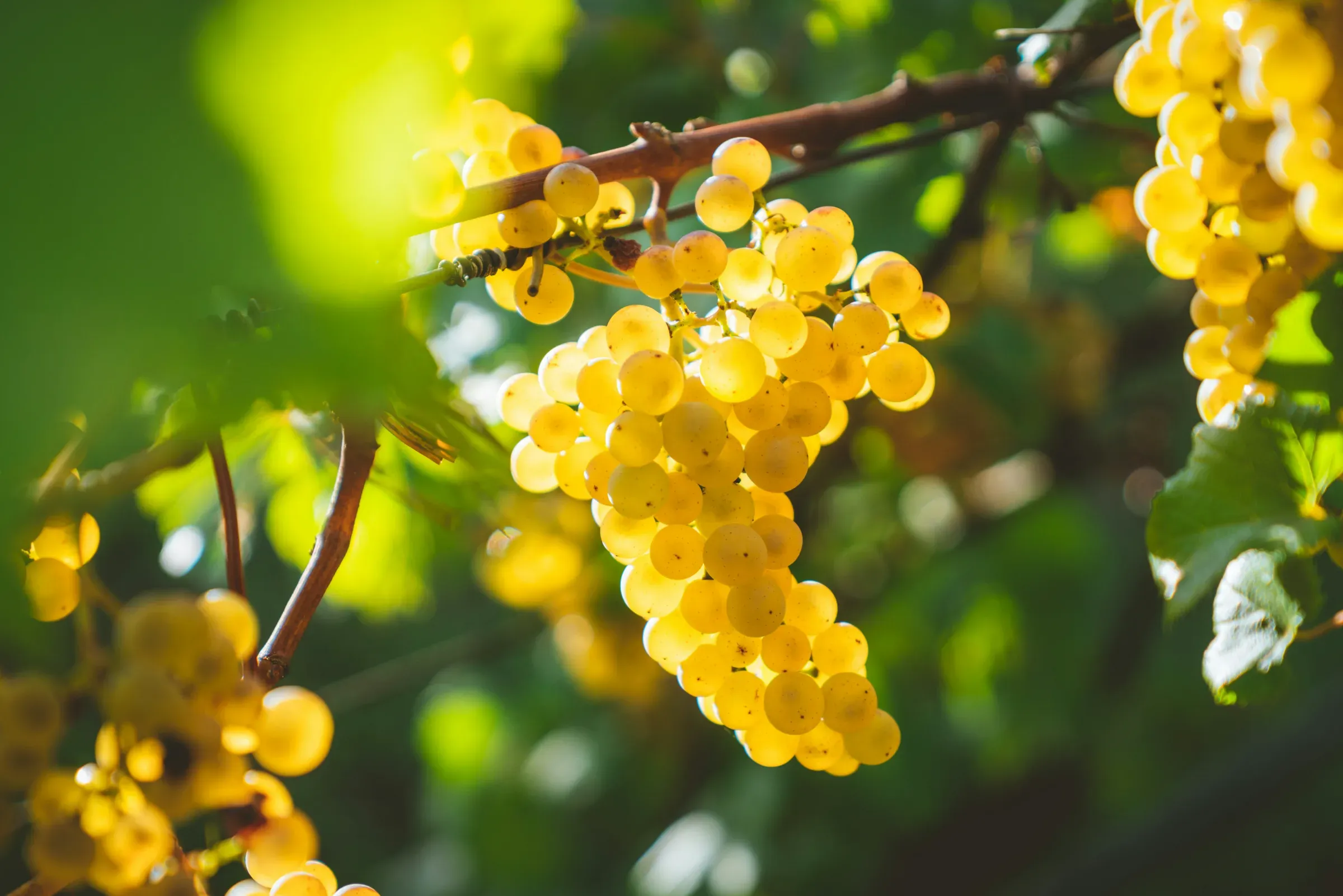
Chardonnay is one of the world’s most widely planted white grapes, with about 211,000 ha under vine (OIV 2023).
It originates from Burgundy but is now grown everywhere from cool coastal to warm Mediterranean climates.
Because it is naturally neutral, Chardonnay’s flavour and texture depend heavily on where and how it is made.
2. Phenology and Vineyard Factors
- Budburst: early → very frost-sensitive.
- Ripening: early to mid-season; ~140–150 days after budburst (around two weeks before Pinot Noir).
- Preferred climates: cool–moderate (13–18 °C growing-season average).
- Soils: limestone, marl, and clay for structure; chalk for sparkling wines.
- Hazards: frost, coulure, mildew, sunburn and acid loss in heat.
Premium producers aim for low yields (35–55 hL/ha) to preserve concentration, though legal limits vary by region.
3. Winemaking Styles
| Style | Technique | Key Regions | Wine Profile |
|---|---|---|---|
| Unoaked / Minimalist | Stainless steel or neutral oak; partial MLF; lees ageing 4–12 mo. | Chablis, Trentino, Casablanca, Elgin | High acid, green apple, lemon, flinty. |
| Moderately Oaked | Split ferment (steel + oak), 10–25% new oak, bâtonnage. | Mâconnais, Friuli VG, Sonoma Coast, Marlborough | Citrus, peach, light toast, balanced texture. |
| Fully Oaked / Premium | Barrel fermentation, full MLF, 25–100% new oak. | Meursault, Puligny, Napa, Margaret River, Langhe | Ripe stone fruit, hazelnut, vanilla, long finish. |
| Sparkling Base | Early harvest, high acid, neutral ferment. | Champagne, Franciacorta, Trentodoc, England | Linear, citrus, crisp. |
4. Regional Expressions
France
- Burgundy: Chablis (unoaked, mineral); Côte de Beaune (Meursault, Puligny, Chassagne – rich and complex); Mâconnais (ripe, floral).
- Champagne: high-acid base for Blanc de Blancs.
- Jura: oxidative and topped-up styles.
- Loire: component of Crémant de Loire.
Italy
- Trentino–Alto Adige: crisp, alpine acidity.
- Friuli / Veneto: fresh, unoaked or lightly oaked.
- Langhe (Piedmont): barrel-fermented, full-bodied (e.g., Gaja).
- Franciacorta (Lombardy): traditional-method sparkling; legal max yield 95 hL/ha.
- Sicily: tropical fruit balanced by altitude freshness (Etna, Menfi).
USA
- California:
- Cool coastal (Sonoma, Carneros, Sta. Rita Hills): citrus, balance, moderate oak.
- Warm inland (Central Valley, Napa): tropical, full-bodied.
- Oregon: Willamette Valley – restrained, mineral.
- Washington: peachy, structured.
Australia & New Zealand
- Margaret River: ripe yet fresh, nutty oak.
- Adelaide Hills / Yarra Valley: elegant, citrus-driven.
- Tasmania: cool, crisp, for sparkling.
- Marlborough / Hawke’s Bay: bright fruit, moderate oak.
Chile & Argentina
- Chile: Casablanca, Limarí – saline, precise.
- Argentina: Uco Valley – altitude preserves acidity.
South Africa
- Elgin / Walker Bay: cool, citrus, refined.
- Stellenbosch: fuller, riper style.
UK
- Key grape for traditional-method sparkling wines (Sussex, Kent, Hampshire).
5. Yields and Production
| Region | Legal Max (hL/ha) | Typical Premium |
|---|---|---|
| Burgundy Village | 45–50 | 35–40 |
| Grand Cru | 40 | 25–35 |
| Champagne | ≈100 | 85–95 |
| Franciacorta | 95 | 70–80 |
| Langhe DOC | 63 | 35–45 |
| Trentino DOC | 84 | 55–65 |
6. The “ABC” Backlash
The 1990s “Anything But Chardonnay” trend arose after years of over-oaked, buttery mass-market wines.
Because Chardonnay is so neutral, winemaking excess quickly dominates.
Modern versions are fresher, lower in alcohol, and more terroir-driven, restoring the grape’s reputation.
7. Summary
- Budburst: early; Ripening: early–mid (140–150 days).
- Yields: 35–55 hL/ha fine-wine; up to 100 hL/ha sparkling.
- Key regions: Burgundy, Champagne, Italy (Langhe, Franciacorta, Trentino), California, Australia, New Zealand, Chile, South Africa, UK.
- Styles: unoaked to richly oaked, still to sparkling.
Chardonnay remains the most adaptable and expressive white grape — equally at home in Chablis, Champagne, or coastal California.
Check your knowledge
Enthusiast quiz