Burgundy Spotlight
Burgundy Viticulture, Winemaking, and Production Overview
1. Climate and Environment
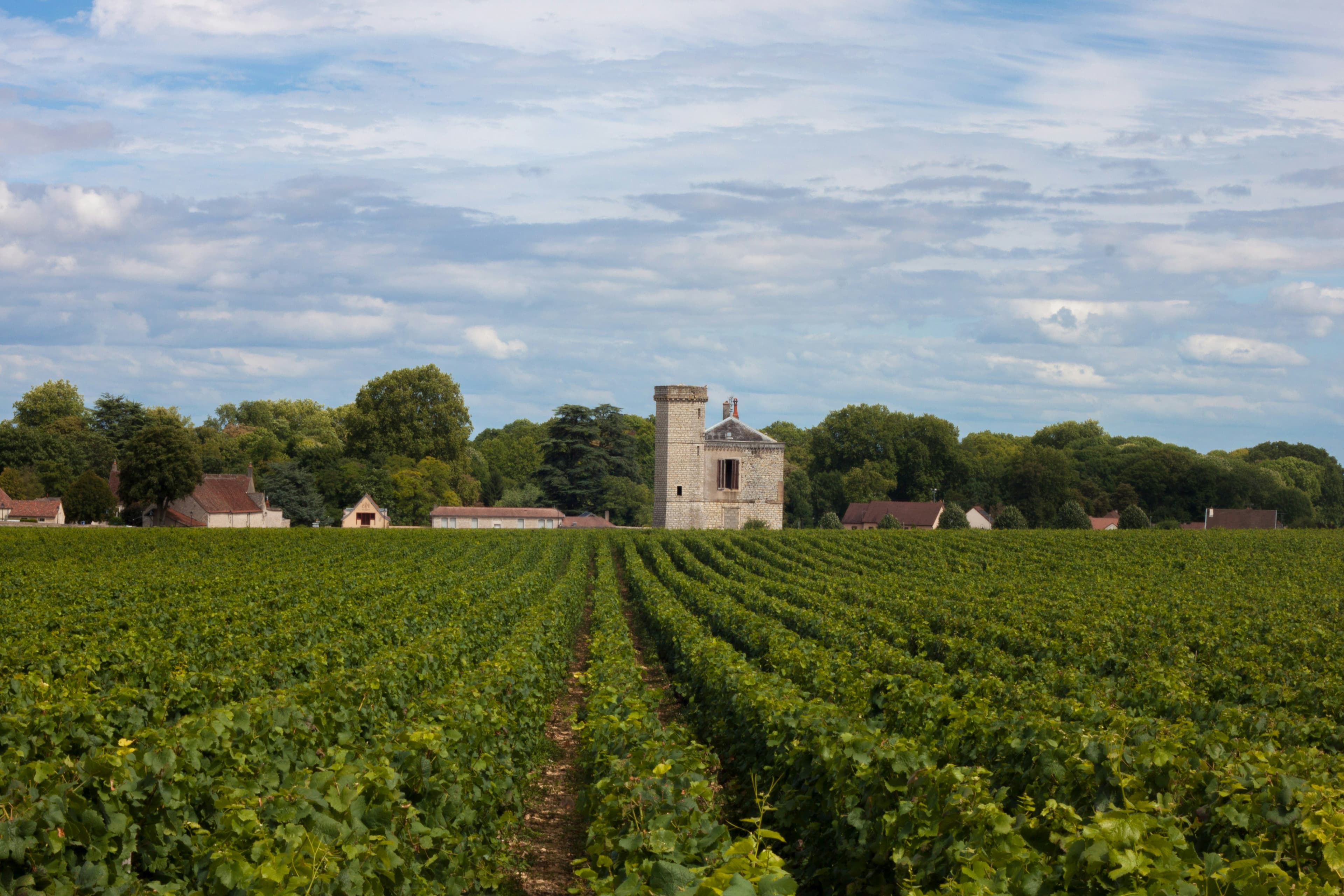
Burgundy lies in eastern France, stretching from Chablis in the north to the Mâconnais in the south. The region has a continental climate — cooler and drier than Bordeaux — with cold winters, warm summers, and strong vintage variation.
Annual rainfall averages 650–700 mm, concentrated in spring and autumn. Spring frost, hail, mildew, and heat spikes are major hazards. Warm days and cool nights favour slow ripening, preserving acidity and enhancing aromatic precision.
2. Soils and Terroir
Burgundy’s terroir is extraordinarily diverse, underpinned by Jurassic limestone and marl, with varying clay, gravel, and sand. Small changes in slope and exposure create a patchwork of vineyard plots known as climats, each expressing its own micro-terroir.
- Chablis: Cool climate, Kimmeridgian limestone and marl; yields mineral, high-acid Chardonnay.
- Côte de Nuits: Limestone-clay soils on mid-slopes; produces structured, long-lived Pinot Noir.
- Côte de Beaune: Marl-limestone and iron-rich soils; home to both fine Pinot Noir and the world’s most prestigious Chardonnays.
- Côte Chalonnaise: Limestone and clay; slightly warmer; lighter, fruit-forward styles.
- Mâconnais: Limestone and marl; warmest zone; generous, ripe Chardonnay.
The Côte de Nuits and Côte de Beaune together form the Côte d’Or (“Golden Slope”) — Burgundy’s qualitative heart. The term reflects the region’s east- and southeast-facing limestone slopes, ideal drainage, and dense concentration of Premier and Grand Cru vineyards.
3. Grape Varieties and Key Characteristics
Red Grapes
| Variety | Budburst / Ripening | Skin Thickness | Acidity | Tannins | Flavour Intensity | Typical Flavours | Role in Blends | Main Hazards |
|---|---|---|---|---|---|---|---|---|
| Pinot Noir | Early / Early–Mid | Thin | Medium–High | Medium, fine, silky | High | Red cherry, raspberry, violet, earth, mushroom | Primary red grape | Frost, coulure, millerandage, rot, oidium |
| César | Mid / Late | Thick | Medium | High | Medium–High | Dark fruit, spice, rustic tannin | Minor blending in Yonne | Frost, poor fruit set |
| Tressot | Mid / Late | Medium | Medium | Medium | Medium | Red fruit, pepper | Rarely used | Frost, mildew |
White Grapes
| Variety | Budburst / Ripening | Skin Thickness | Acidity | Flavour Intensity | Typical Flavours | Role in Blends | Main Hazards |
|---|---|---|---|---|---|---|---|
| Chardonnay | Early / Mid | Thin | Medium–High | High | Green apple, lemon, hazelnut, butter, mineral | Main white grape | Frost, coulure, mildew, botrytis |
| Aligoté | Early / Early | Thin | High | Medium | Citrus, green apple, floral | Secondary white grape | Frost, coulure |
| Pinot Blanc | Early / Mid | Medium | Medium | Medium | Pear, melon, floral | Minor component | Frost, mildew |
| Sacy | Early / Early | Thin | High | Light | Citrus, floral | Regional blending | Frost, rot |
4. Other Permitted Grape Varieties (AOC Rules)
While Pinot Noir and Chardonnay dominate, AOC rules also permit:
Red: Pinot Noir, César, Tressot.
White: Chardonnay, Aligoté, Pinot Blanc, Pinot Gris, Sacy, Melon de Bourgogne.
(Melon and Pinot Gris survive mainly in a few regional AOCs.)
5. Vineyard Management and Yields
Planting densities average 8 000–10 000 vines/ha, trained using Guyot systems. Slopes often require hand cultivation and harvesting.
Typical yields:
- Regional: 55–60 hl/ha
- Village: 50 hl/ha
- Premier Cru: 45 hl/ha
- Grand Cru: 35 hl/ha
Major hazards: spring frost (Chablis, Côte de Beaune), hail (Volnay, Pommard), and mildew in humid seasons.
Many growers now use organic or biodynamic methods, frost protection (candles, fans, sprinklers), and soil cover crops.
6. Winemaking Practices
Red Wines
Pinot Noir is generally partially destemmed and fermented in open-top vats. Punch-downs (pigeage) or pump-overs (remontage) extract colour and tannin. Fermentation temperatures are moderate to preserve aromatics. Wines undergo malolactic conversion and mature in 228 L French oak barrels (20–50 % new oak for top crus).
White Wines
Chardonnay is gently pressed, fermented in stainless steel (Chablis) or oak barrels (Côte de Beaune, Mâconnais). Lees stirring (bâtonnage) adds texture; most undergo malolactic conversion. Maturation lasts 6–18 months, typically with 10–30 % new oak.
7. Annual Production and Variation
Burgundy produces 1.4–1.6 million hL (~140–160 million L) annually, but volumes fluctuate heavily due to frost and hail.
Average breakdown:
- Dry White Wines: ~59 %
- Dry Red Wines: ~30 %
- Crémant de Bourgogne: ~11 %
Crémant proportion has grown significantly in the more recent figures (2024) due to expansion in the Mâconnais and Châtillonnais.
Good years (2015, 2019, 2022) produce ripe, concentrated wines; poor years (2013, 2016, 2021) see reduced yields and higher acidity.
8. Major Subregions and Styles
- Chablis: 100 % Chardonnay; cool climate; high-acid, flinty, mineral wines. Top producers: Raveneau, Dauvissat, William Fèvre.
- Côte de Nuits: Pinot Noir heartland; limestone-clay soils on east-facing slopes; powerful, structured, age-worthy reds from villages like Gevrey-Chambertin, Chambolle-Musigny, Vosne-Romanée, and Nuits-St-Georges. Top producers: Domaine de la Romanée-Conti, Armand Rousseau, Leroy, Méo-Camuzet.
- Côte de Beaune: Lighter marls with more iron; produces both refined reds (Pommard, Volnay) and world-class whites (Meursault, Puligny-Montrachet, Chassagne-Montrachet). Top producers: Domaine Leflaive, Coche-Dury, Jean-Marc Roulot, Louis Jadot, Bouchard Père et Fils.
- Côte Chalonnaise: Limestone-clay; slightly warmer; lighter, early-drinking styles (Mercurey, Rully, Givry, Montagny). Top producers: Faiveley, Château de Chamirey, A.&P. de Villaine.
- Mâconnais: Warmest area; fruit-driven Chardonnays (Mâcon, Pouilly-Fuissé). Top producers: Domaine Ferret, Olivier Merlin, Verget.*
The Côte de Nuits and Côte de Beaune collectively form the Côte d’Or, Burgundy’s “Golden Slope”. Its perfect east and southeast exposures, limestone bedrock, and concentration of classified vineyards justify its special recognition as Burgundy’s highest-quality zone.
9. Land Ownership, Labelling & Classification
After the French Revolution, vineyards were divided under Napoleonic inheritance law, creating extreme fragmentation. A single Grand Cru (e.g., Clos de Vougeot) may have dozens of owners.
Each owner may bottle their own wine, so two bottles labelled “Gevrey-Chambertin 1er Cru Les Cazetiers” can differ widely in style and quality.
Two business models coexist:
- Domaines – growers bottling their own wines.
- Négociants – merchants buying grapes or finished wines (e.g., Louis Jadot, Joseph Drouhin, Bouchard Père et Fils).
The AOC hierarchy – Grand Cru, Premier Cru, Village, Regional – is based on climats, vineyard parcels recognised by UNESCO as part of Burgundy’s cultural heritage.
Currently 84 AOCs (33 Grands Crus, 44 Village/Premier, 7 Regional).
10. Reasons for High Status and Prices
- Tiny vineyard area (~30 000 ha); Grand Cru = < 2 % of output.
- Exceptional terroir diversity with precise site expression.
- Fragmented ownership → tiny production volumes per domaine.
- Global demand and collector prestige.
- High costs: manual labour, low yields, small-scale vinification.
- Historic reputation: sites like Romanée-Conti, Montrachet, Musigny define global benchmarks.
Result: rarity and provenance combine to produce some of the world’s highest wine prices.
11. Recent Trends
- Warmer vintages bring richer styles but higher alcohol.
- Growth of organic, biodynamic, and regenerative viticulture.
- Frost-protection technology now widespread.
- Rising attention to lesser-known villages (Saint-Romain, Marsannay, Auxey-Duresses) for value.
- Micro-négociants and young winemakers add innovation while preserving terroir focus.
12. Advantages and Disadvantages
Advantages:
- Ideal combination of limestone soils and continental climate.
- Single-varietal wines show clear terroir expression.
- Transparent, hierarchical AOC system communicates quality.
Disadvantages:
- Frost and hail cause frequent yield losses.
- Fragmentation → inconsistent quality.
- Scarcity and speculation inflate prices.
13. Summary
Burgundy’s prestige stems from precise terroir expression and varietal purity.
Pinot Noir and Chardonnay reveal site and soil like nowhere else on earth.
At its heart lies the Côte d’Or — comprising the Côte de Nuits and Côte de Beaune — whose limestone slopes, perfect exposures, and density of Grand Cru vineyards justify its special classification and unmatched reputation.
Small scale, meticulous vineyard work, and centuries of tradition make Burgundy both a benchmark for terroir wines and one of the most sought-after regions in the world.
Check your knowledge
Expert quiz