Alsace Spotlight
Alsace Viticulture and Winemaking
1. Climate and Environment
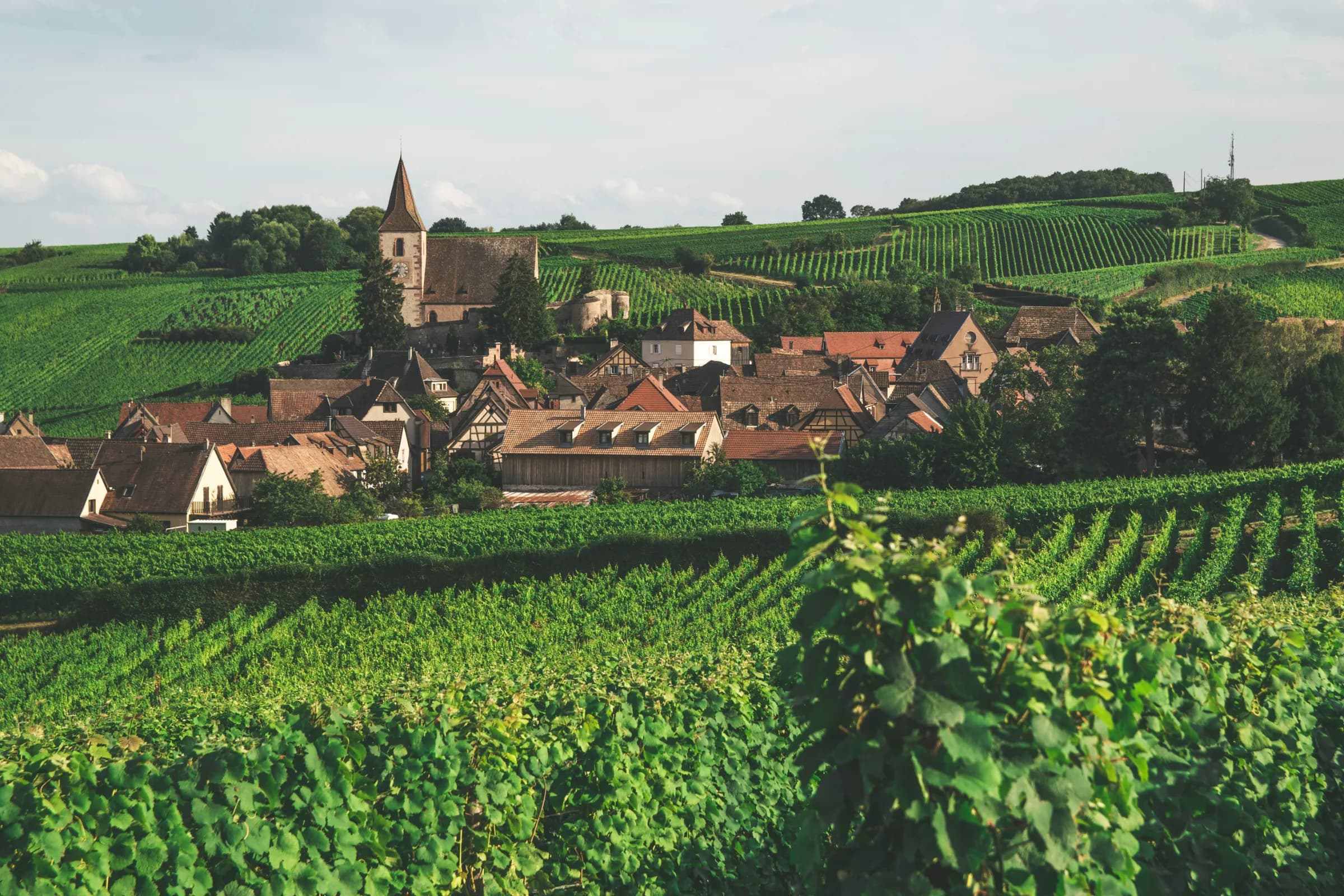
Alsace lies in northeastern France, between the Vosges Mountains and the Rhine River. It has a cool continental climate, protected from Atlantic rain by the Vosges. The region is one of France’s driest, with around 500–600 mm of rain per year.
Long, sunny autumns allow slow ripening, giving aromatic wines with high natural acidity. Spring frost, hail, and drought are the main hazards.
2. Soils and Terroir
Soils vary greatly — granite, limestone, marl, clay, and volcanic — often within the same hillside.
Vineyards lie mostly on east- and southeast-facing slopes, gaining morning sun and good drainage.
This soil and exposure diversity produces a wide range of wine styles.
3. Key Grape Varieties
| Grape | Acidity | Style / Flavours | Notes |
|---|---|---|---|
| Riesling | High | Lime, apple, mineral, sometimes petrol | Signature grape; long-lived, dry to off-dry. |
| Gewurztraminer | Low | Lychee, rose, spice | Full-bodied, aromatic, often off-dry. |
| Pinot Gris | Medium | Peach, honey, smoke | Rich, textured; dry to sweet. Different from light Italian Pinot Grigio. |
| Pinot Blanc / Auxerrois | Medium | Soft apple, pear | Genetically the same; 85–90% used for Crémant, small still production. |
| Sylvaner | Medium–High | Green apple, herbs | Out of fashion, but old vines yield concentrated, complex wines. |
| Klevener de Heiligenstein | Medium | Grapefruit, spice | Rare local Savagnin Rose. |
| Pinot Noir | Medium | Red cherry, spice | Only red grape; light to medium-bodied; best from Ottrott. |
4. Vineyard Management and Yields
Vineyards are densely planted (4,000–6,000 vines/ha). Steeper Grand Cru slopes are terraced.
Yields: 80 hl/ha (AOC), 55 hl/ha (Grand Cru), up to 100 hl/ha (Crémant).
Low rainfall and humidity encourage organic and biodynamic farming.
5. Appellations
- AOC Alsace: ~70% of production; varietal wines.
- AOC Alsace Grand Cru: 51 top vineyard sites; only Riesling, Pinot Gris, Gewurztraminer, or Muscat allowed.
- AOC Crémant d’Alsace: Traditional-method sparkling wine.
Klevener de Heiligenstein is a permitted subregional specialty made from Savagnin Rose.
6. Winemaking
White wines are fermented in stainless steel or neutral oak; MLC avoided for Riesling, used for Pinot Gris. Lees aging adds body.
Pinot Noir reds are gently extracted and aged in stainless steel or oak.
VT and SGN denote late-harvest and botrytized sweet wines.
7. Production and Styles
Annual output: 1.1–1.2 million hL (~110–120 million L).
- Still whites: ~75%
- Reds/rosés: ~10%
- Crémant: ~25%
Bas-Rhin: lighter wines (includes Ottrott, Heiligenstein).
Haut-Rhin: richer wines, most Grand Crus.
8. Key Facts
- Riesling, Gewurztraminer, Pinot Gris = top aromatic whites.
- Ottrott Pinot Noir = historic red site.
- Crémant d’Alsace = growing importance.
- Old-vine Sylvaner = niche revival.
- Dry, sunny climate ensures reliable ripening.
Alsace remains one of France’s most distinctive fine-wine regions, producing precise, expressive, and terroir-driven wines.
Check your knowledge
Enthusiast quiz