Veneto
Veneto
1. Overview
Veneto stretches from Lake Garda to the Venetian lagoon and north to the Dolomites.
It is one of Italy’s most diverse and commercially important wine regions, producing:
- Valpolicella, Ripasso, Amarone, and Recioto
- Soave and Soave Classico
- Conegliano–Valdobbiadene Prosecco Superiore DOCG
- Bardolino, Lugana (shared with Lombardy), Lessini Durello, IGT Veneto varietals
Its identity comes from varied soils (limestone, basalt, morainic glacial deposits), Alpine–maritime climatic contrasts, and historic techniques such as appassimento.
2. Climate & Terroir
Climate
- Lake Garda: moderating influence → lighter Bardolino reds and rosés.
- Valpolicella / Soave hills: continental but ventilated by Alpine breezes.
- Prosecco hills (Prealps): altitude + steep slopes → high diurnal ranges.
- Venetian plains: warmer, fertile, higher humidity → high-volume production.
Soils
- Valpolicella: limestone + marl (Classico), basaltic volcanic zones, morainic deposits.
- Soave Classico: mixed volcanic basalt (Monteforte) and limestone/marl (Soave).
- Prosecco Superiore: morainic, clay, sandstone, conglomerate on steep slopes.
- Bardolino: glacial deposits around Lake Garda.
- Lugana: heavy clay + moraines south of Garda.
3. Grape Varieties (Expert Table)
| Variety | Colour | Skin Thickness | Ripening | Vigour/Yield | Preferred Soils | Hazards | Key Traits | Wine Styles |
|---|---|---|---|---|---|---|---|---|
| Corvina | Black | Medium-thick | Late | Moderate | Limestone, basaltic hillsides | Botrytis risk during drying | Cherry, violet, bright acidity | Valpolicella, Ripasso, Amarone, Recioto |
| Corvinone | Black | Thick | Late | High | Hillsides, calcareous soils | Sunburn | Adds body & dark fruit | Amarone, Valpolicella blends |
| Rondinella | Black | Medium | Mid | Very high | Versatile | Disease-resistant | Colour stability, herbal tones | Supporting role in blends |
| Oseleta | Black | Thick | Late | Very low | Limestone | Hard to ripen | Dense colour, tannin | Premium Valpolicella blends |
| Molinara | Black | Thin | Mid-late | Medium | Alluvial | Oxidation | High acidity, pale colour | Historically used in blends |
| Garganega | White | Medium | Mid-late | High | Basalt & limestone | Botrytis | Almond, citrus, herbs, subtle minerality | Soave / Soave Classico |
| Trebbiano di Soave | White | Medium | Mid | Medium | Limestone | Mildew | Citrus, fennel, mineral | Soave blending grape |
| Glera | White | Thin | Early-mid | High | Morainic & sandstone | Downy mildew, sunburn | Pear, apple, white flowers; crisp acidity | Prosecco (Charmat/long-Charmat) |
| Raboso Piave | Black | Thick | Very late | Low | Gravel, clay | Harsh tannin when underripe | Sour cherry, spice, high acid | Still reds, some sparklings |
| Durella | White | Thick | Late | Medium-high | Volcanic | Hard to ripen fully | Razor acidity | Lessini Durello sparkling |
4. Comparative Overview of Major Veneto DOs
| Appellation | Main Grapes | Dominant Soils | Representative Producers | Max Yield | Approx. Production |
|---|---|---|---|---|---|
| Valpolicella DOC | Corvina, Corvinone, Rondinella | Limestone, marl, basalt, morainic | Quintarelli, Allegrini, Speri, Tedeschi | ~12 t/ha (≈84 hl/ha) | ~147,500 hl (Valpolicella DOP total) |
| Amarone della Valpolicella DOCG | Corvina-family | Limestone + basalt slopes | Quintarelli, Dal Forno, Allegrini | 12 t/ha (but max 40% grape-to-wine yield after appassimento) | ~148,000 hl (Amarone+Recioto combined) |
| Soave / Soave Classico DOC | Garganega, Trebbiano di Soave | Basalt (Monteforte), limestone (Soave), alluvial plains | Pieropan, Gini, Suavia, Inama | DOC: 14 t/ha; DOCG Superiore: 10 t/ha | ~383,000 hl; ~7,000 ha |
| Conegliano–Valdobbiadene Prosecco Superiore DOCG | Glera (85%+) | Morainic, sandstone, clay; steep slopes | Bisol, Adami, Ruggeri, Nino Franco | 13.5 t/ha (Rive: 13; Cartizze: 12) | ~92–104 million bottles |
| Bardolino / Chiaretto | Corvina, Corvinone, Rondinella | Glacial moraines | Le Fraghe, Rizzardi | 12 t/ha (cru: 10 t/ha) | ~187,000 hl; ~2,700 ha |
| Lugana DOC | Turbiana | Heavy clay & moraines | Ca’ dei Frati, Ottella | ≈87 hl/ha (70% grape-to-wine ratio) | ~211,650 hl; ~2,560 ha |
5. Core Regions & Appellations
5.1 Valpolicella DOC & Valpolicella Classico
- Hill valleys north of Verona; best sites in the Classico subzone.
- Fresh cherry fruit, herb notes, moderate tannin.
- Superiore: lower yields, more concentration.
5.2 Ripasso della Valpolicella DOC
Valpolicella refermented on Amarone/Recioto skins →
- deeper colour
- firmer tannin
- more dried-fruit aromatics
- alcohol uplift
Bridges Valpolicella and Amarone stylistically.
5.3 Amarone della Valpolicella DOCG
Dry wine from appassimento grapes.
Appassimento:
- Corvina-family grapes dried 2–3 months in fruttai.
- Concentration → alc. 15–17%.
- Fermented dry → powerful, structured wine with dried cherry, fig, cocoa.
Regulations: Maximum 40% grape-to-wine yield after drying.
5.4 Recioto della Valpolicella DOCG
Sweet appassimento wine.
Fermentation halted to retain sugar.
Profile: chocolate, dried fig, cherry liqueur.
5.5 Soave DOC & Soave Classico DOC
- Soave Classico hills:
- East (Monteforte): volcanic basalt
- West (Soave town): limestone/marl
- Garganega core variety; Trebbiano di Soave supporting.
- Citrus, almond, pear, mineral tension; top examples age 5–10+ years.
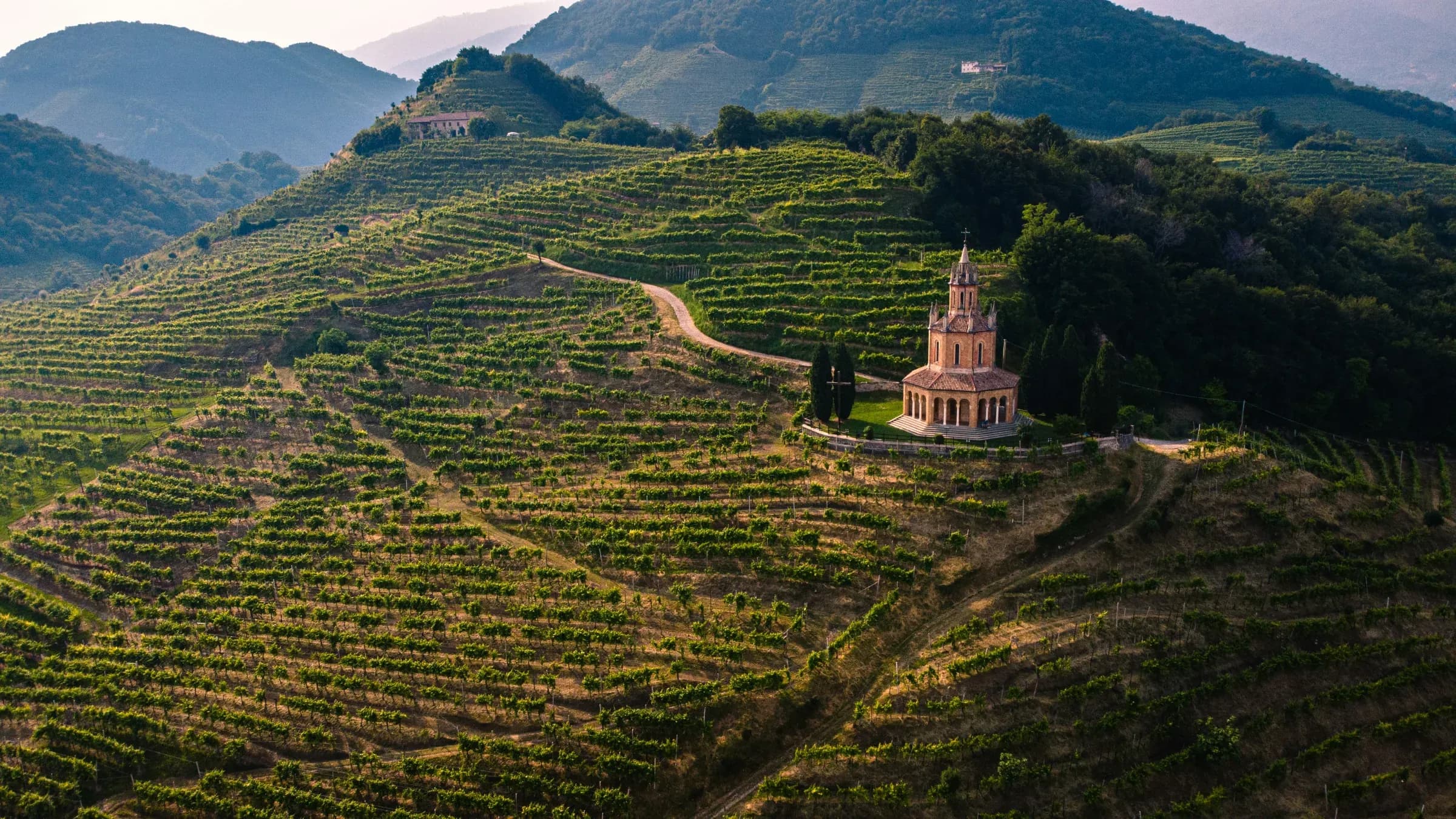
5.6 Conegliano–Valdobbiadene Prosecco Superiore DOCG
- Steep, hand-farmed hills
- High diurnals, long Charmat methods
- Styles: Brut Nature → Dry
- Rive (single hill crus) & Cartizze (top site) offer premium expressions.
5.7 Bardolino & Chiaretto
- Garda-influenced, lighter reds and rosés.
- Raspberry, strawberry, herbs; low tannin.
5.8 Lugana DOC
- Turbiana (Verdicchio biotype).
- Clay/moraine soils.
- Aromatic, mineral whites with ageing capacity (especially Riserva).
6. Winemaking Trends
- Valpolicella: more cru bottlings, gentler extraction, lower residual sugar in Amarone.
- Soave: focus on terroir expression, volcanic vs limestone distinctions.
- Prosecco Superiore: movement toward drier styles, Col Fondo ancestral method, hillside terroir emphasis.
- Revival of Durella and Raboso; sustainability on steep terraces.
7. Key Producers
- Amarone/Valpolicella: Quintarelli, Dal Forno, Allegrini, Speri, Masi, Tedeschi
- Soave: Pieropan, Gini, Inama, Suavia
- Prosecco Superiore: Bisol, Adami, Ruggeri, Col Vetoraz
- Bardolino: Le Fraghe, Guerrieri Rizzardi
- Lugana: Ca’ dei Frati, Ottella
8. Wines to Seek Out
- Amarone della Valpolicella
- Recioto della Valpolicella
- Valpolicella Classico Superiore
- Soave Classico (Pieropan “La Rocca”, Gini “Salvarenza”)
- Prosecco Superiore Rive bottlings
- Cartizze DOCG
- Chiaretto di Bardolino
- Lugana Riserva
9. Summary
Veneto’s diversity ranges from the powerful, appassimento-based Amarone to mineral Soave and the high-altitude finesse of Prosecco Superiore.
A complex interplay of volcanic and limestone soils, mountain breezes, and traditional techniques shapes one of Italy’s most important wine regions.
Check your knowledge
Expert quiz