Pinot Noir
Pinot Noir: Viticulture, Winemaking, Regions & Styles
1. Grape Identity, Scale & Environment
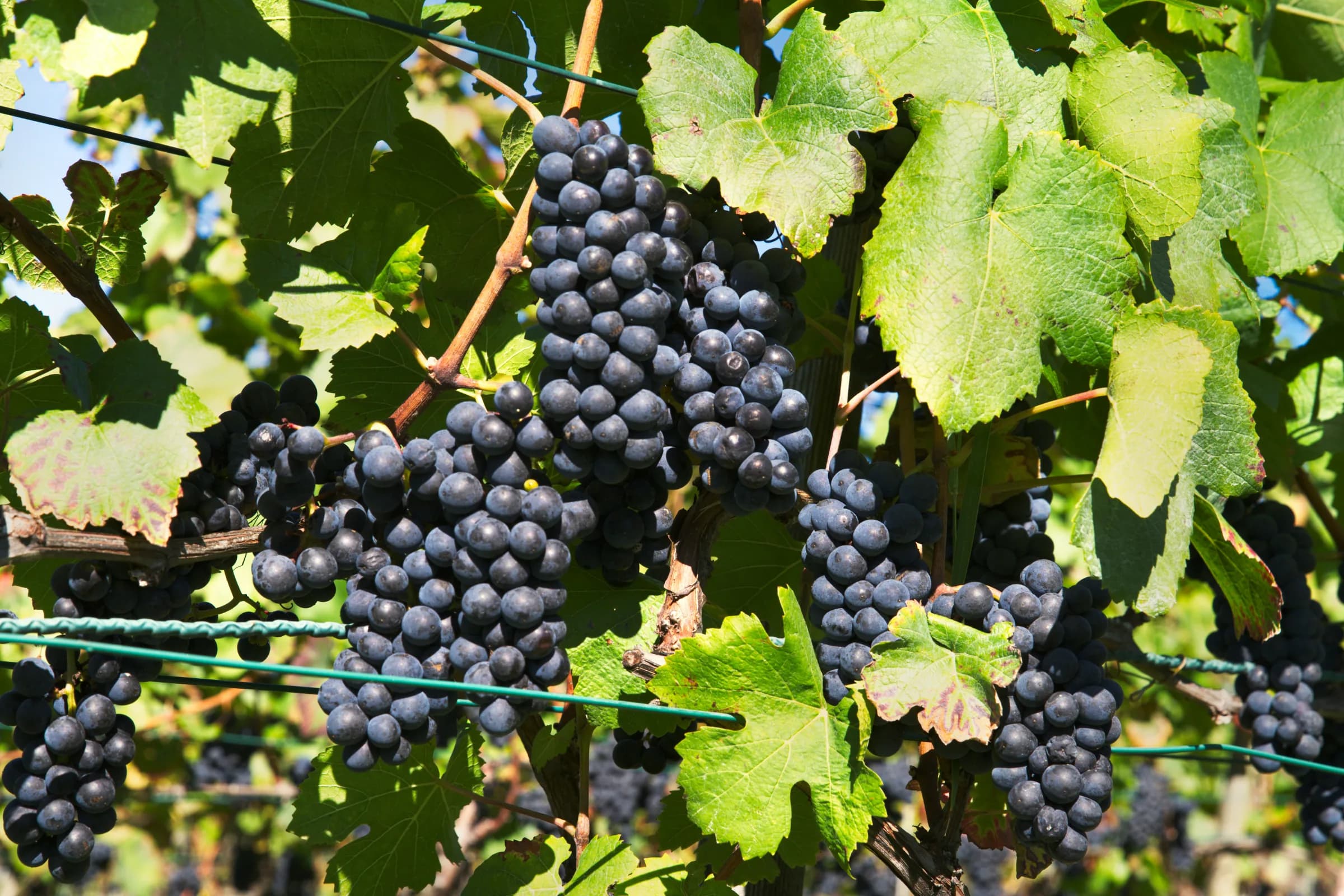
Pinot Noir (Spätburgunder / Blauburgunder) is one of the world’s most widely admired premium black varieties, with an estimated ~115,000 ha planted globally.
It performs best in cool to cool-moderate climates that allow slow, steady ripening — maritime (e.g., Sonoma Coast), semi-continental (Burgundy, Alsace, Central Otago), or temperate coastal (Hemel-en-Aarde, Tasmania).
The variety is thin-skinned, low in anthocyanins, and highly sensitive to site and climate.
Styles range from pale, delicate reds with red-fruit purity to fuller, spicier, darker-fruited wines in warmer sites. Pinot’s hallmarks are high aromatic definition, medium(+) acidity, and fine, silky tannins.
2. Phenology, Best Conditions & Hazards
- Budburst: Early → prone to spring frost.
- Ripening: Early- to mid-season → requires stable, temperate weather through véraison.
- Preferred conditions: Cool-climate zones (average growing-season temperature 14–17 °C), free-draining limestone, marl, or schist soils, and strong diurnal temperature range for colour and aroma retention.
- Major hazards: Spring frost, coulure / millerandage in cool, windy flowering, powdery mildew, botrytis (thin skins), sunburn / shrivel during heat spikes, and drought stress on shallow soils.
3. Vineyard Practice & Target Yields
- Density: 8 000–10 000 vines/ha in traditional European sites; 3 000–6 000 vines/ha common in New World plantings.
- Training: Guyot or cordon; canopy kept open to avoid rot.
- Typical fine-wine yields: 30–45 hL/ha for still wines; higher (≈ 90–100 hL/ha equivalent) for sparkling bases such as Champagne.
- Quality driver: low yields, balanced canopy, and rigorous fruit selection.
4. Winemaking
- Sorting: essential to remove rot or unripe berries.
- Whole-cluster vs destemmed:
- Whole-cluster fermentation (20–100 %) adds floral lift, spice, and stem tannins.
- Destemmed fruit gives softer, purer red-fruit profiles.
- Maceration: gentle extraction; cold soak optional.
- Fermentation: small open vats; ambient or selected yeast; temperature 26–32 °C.
- Aging: 10–18 months in French oak (20–50 % new); larger barrels or foudres common; minimal filtration.
- Sparkling base wines: pressed gently for low phenolics; high-acid harvests; large tank or bottle aging depending on region (Champagne yields ~99 hL/ha cap).
5. Geography, Expression & Regional Differences
France
Burgundy
The spiritual home of Pinot Noir. Fine-grained tannins, high acidity, and site-expressive styles ranging from the delicate, perfumed wines of Chambolle-Musigny to the structured, earthy depth of Gevrey-Chambertin.
Yields: 35–45 hL/ha typical (Grand Cru base 35–37 hL/ha).
Key features: Limestone-marl soils; meticulous viticulture; minimal blending; long aging potential.
Champagne
Pinot provides backbone for blanc de noirs and blends; chalk and cool climate ensure high acid and moderate alcohol. Still wines (Coteaux Champenois) are gaining prestige.
Annual yield limits: set by Comité Champagne, ~15 500 kg/ha (≈ 99 hL/ha).
Alsace
Pinot Noir is Alsace’s only red variety, with ~1 650 ha planted (≈ 11 % of regional vineyards).
Historically light and simple, modern Alsace Pinot Noir now rivals fine Côte d’Or styles thanks to climate warming, better clones, and lower yields.
- Soils: limestone, marl, and volcanic sandstone in foothill villages (e.g., Ribeauvillé, Rouffach).
- Style: fragrant, red-fruited (cherry, raspberry), supple tannins, and bright acidity; increasingly aged in oak for depth.
- AOC rules: still red and rosé under AOC Alsace; several Grand Cru sites (e.g., Hengst, Kirchberg) now permit Pinot Noir.
- Typical yields: 50–60 hL/ha; premium cuvées cropped lower (~40 hL/ha).
Germany (Spätburgunder)
~11 700 ha nationwide (Baden, Ahr, Pfalz).
Slate or loess soils; cool climate yields perfumed, high-acid wines; fuller styles in Baden. Large oak and whole-cluster fermentation increasing quality.
United States
- Oregon (Willamette Valley): 60 % of vineyard area; volcanic and sedimentary soils; red-cherry, floral, tea-leaf character.
- California: Cooler coastal AVAs (Sonoma Coast, Sta. Rita Hills) yield vibrant, structured wines; inland sites more plush.
New Zealand
~5 800 ha planted; concentrated in Central Otago, Marlborough, Wairarapa.
High UV and cool nights give vivid colour and acidity; dark cherry, thyme, and mineral notes.
Australia
Cool regions (Yarra Valley, Mornington Peninsula, Tasmania, Adelaide Hills) produce elegant, spicy, red-fruited wines and high-quality sparkling bases.
Chile & Argentina
Chile (Casablanca, San Antonio): ocean-cooled vineyards, bright acidity, herbal edge.
Argentina (Patagonia): high latitude; fine, silky texture, delicate fruit.
South Africa
Hemel-en-Aarde: maritime clay-shale soils; perfumed red fruit, savoury spice; balanced alcohol.
Emerging
UK: key component for sparkling; still Pinot expanding in warm vintages.
Japan (Hokkaidō): cool maritime; fresh, low-alcohol reds.
6. Production Levels
- Global total: ≈ 115 000 ha planted (OIV 2023).
- France: ≈ 31 000 ha (Burgundy + Champagne + Alsace).
- Germany: ≈ 11 700 ha.
- US: ≈ 25 000 ha (Oregon + California).
- New Zealand: ≈ 5 800 ha.
Fine-wine yields generally 30–45 hL/ha; Champagne bases ~99 hL/ha.
7. Recent Trends
- Return to whole-cluster fermentation for perfume and texture.
- Reduced new-oak use; shift to larger barrels.
- Organic / biodynamic growth and regenerative vineyard management.
- Clonal and massale diversity to enhance aromatic range and resilience.
- Expansion of cooler sites (altitude, latitude, coastal) as climates warm.
- Increasing success of still Pinot Noir in Champagne and Alsace.
8. The “Secret of Appeal”
Pinot Noir’s allure lies in its transparency to terroir: it transmits soil, slope, and climate with unmatched nuance.
Its fragrance, finesse, and textural delicacy captivate growers and drinkers alike, rewarding precision more than power.
This blend of sensuality and honesty—where vineyard and vintage speak louder than winemaker—remains the essence of its mystique.
9. Summary
- Phenology: early budburst, early-mid ripening, frost and rot-sensitive.
- Ideal conditions: cool climates; limestone or schist soils; long, dry autumns.
- Viticulture: high density, low yields (~30–45 hL/ha).
- Winemaking: careful extraction, optional whole-cluster, moderate oak.
- Key regions: Burgundy, Champagne, Alsace, Germany, Oregon, California, NZ, Australia, Chile, South Africa, UK.
- Global surface: ~115 000 ha; highly site-expressive.
Pinot Noir endures as the archetype of elegance and terroir expression, uniting Old World subtlety with New World vibrancy.
Check your knowledge
Expert quiz