Orange Wines
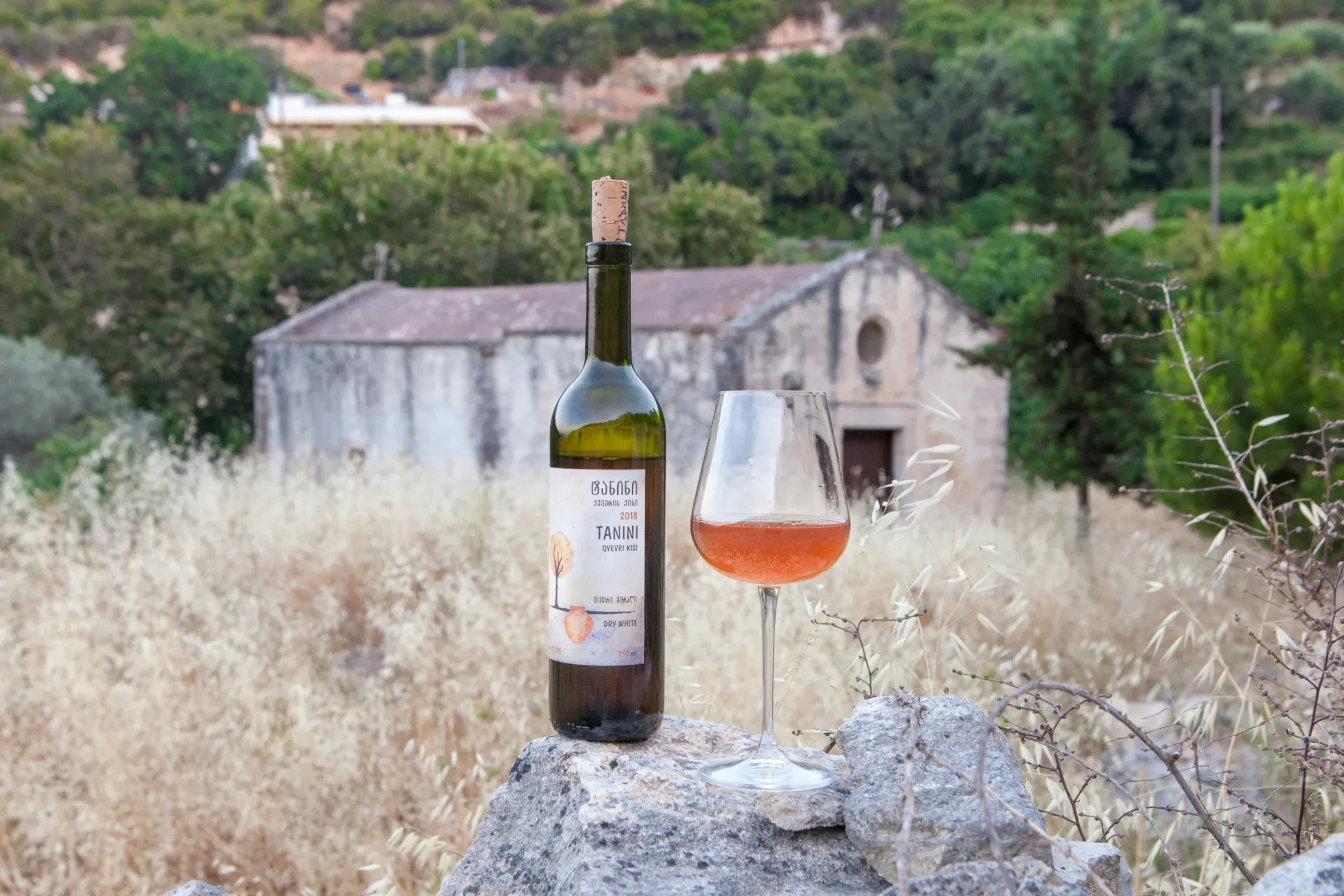
Orange (Amber) Wines
Introduction: what “orange wine” is
Orange wine (often called amber wine) is not a grape variety and not a region. It’s a method: making a white wine with prolonged contact between juice and grape solids (skins, often seeds; sometimes stems) so that phenolic compounds—tannins, flavonoids, and related oxidative substrates—are extracted at meaningful levels. The International Organisation of Vine and Wine (OIV) formalises this as “white wine with maceration,” describing white wine derived from alcoholic fermentation of a must with prolonged contact with grape pomace and setting out related prescriptions. [1]
That single choice—keeping white juice on skins—changes the wine’s structure (grip, tannin, viscosity), colour evolution (amber/burnished rather than pale straw), and oxidation pathway (a different set of reactions and endpoints). It also changes what the wine can do at the table: many orange wines behave like a white–red hybrid—freshness and acidity, but with phenolic shape and savoury depth.
Because orange wines often appear in low-intervention contexts, they’re frequently discussed alongside “natural wine.” The overlap is real, but the terms are not interchangeable: orange is technique; natural is philosophy, sometimes with voluntary certification. [20–22]
1) Skin contact and white grapes: the chemistry that matters
1.1 Phenolics: extracting structure, not just colour
The defining chemical difference between most conventional white wines and orange wines is phenolic extraction. White grapes contain significant phenolics in skins and seeds, but typical white vinification is designed to minimise their extraction because phenolics can express as bitterness/astringency and can accelerate browning. Orange winemaking reverses that priority: it deliberately extracts phenolics and then manages them.
The most consequential phenolic families for orange wines are:
- Flavan-3-ols and proanthocyanidins (condensed tannins): central to “grip,” dryness, and age trajectory.
- Hydroxycinnamic acids and related compounds: key substrates in enzymatic browning and oxidative pathways.
- Flavonols and other skin phenolics: contribute to bitterness, structure, and oxidation chemistry.
A useful practical anchor is that phenolics drive tactile structure and participate in oxidation reactions that shape a wine’s evolution. [2,4]
1.2 Extraction kinetics: duration is only one variable
Extraction is governed by a matrix, not a single dial:
- Duration (hours → days → weeks → months)
- Temperature (cool slows extraction/oxidation; warm accelerates both)
- Alcohol presence (extraction changes as ethanol rises during fermentation)
- Solid-to-juice ratio (skin/seed mass relative to liquid)
- Cap management (pumpovers/punchdowns/submerged cap vs passive maceration)
- Stem inclusion (adds phenolics and alters structural line)
- Oxygen regime (reductive, controlled oxidative, or actively oxidative)
Review literature on orange wine stresses that maceration choices change not only how much is extracted but what kind of phenolic profile results and how it behaves under oxygen. [2]
A 2025 Food Chemistry study on skin contact regimes (including timing/duration differences) found that volatile composition and sensory outcomes shifted measurably depending on how maceration was staged. [3]
1.3 Why the colour turns amber (without red pigments)
Red-wine colour is driven largely by anthocyanins extracted from red skins. Most white grapes contain little to no anthocyanin colour to extract, so orange wine’s amber hue is not “red colour leaking into a white.” Instead, amber/burnished colour is largely a product of oxidised phenolics and polymeric pigments.
A key point from wine oxidation chemistry is that oxygen doesn’t “attack” wine directly. Non-enzymatic oxidation proceeds largely through polyphenol-driven redox pathways, generating reactive products that drive colour and aroma change. [5]
1.4 Acetaldehyde, polymerisation, and the “shape” of oxidation
In orange wines, oxidation is less about “more or less” and more about tempo and pathway. Acetaldehyde can act as a bridge between phenolic molecules, forming ethylidene-linked products that influence polymer formation, mouthfeel, colour stability, and aromatic direction. [6]
Oxygen’s role in bottle ageing is also strongly tied to which aroma compounds are formed and which sulfur-containing volatiles are transformed; oxygen management is therefore inseparable from stylistic outcome. [7]
1.5 Aroma: why orange wines don’t have one fixed profile
Orange wines are often described with recurring cues—citrus peel, dried stone fruit, tea/chamomile, resinous herbs, spice, sometimes bruised-apple or cider-like notes. These are emergent outcomes from:
- extraction of skin-derived compounds and aroma precursors,
- yeast metabolism in a different phenolic/nutrient environment,
- oxygen exposure during fermentation/maceration,
- and time on solids affecting redox balance and polymerisation.
In other words: the same grape can produce markedly different outcomes depending on maceration length, temperature, oxygen tempo, and vessel. [2–3]
2) Why skin contact is standard in reds and optional in whites
In red winemaking, skin contact is the engine: it’s how colour and much of the phenolic structure enter the wine. In white winemaking, skin contact is often treated as a risk because it can introduce bitterness/astringency and accelerate browning; conventional white wine therefore prioritises early separation of juice from skins and frequently reductive handling.
Orange winemaking flips those priorities.
But “white made like a red” is still an oversimplification. Orange wines exist on a continuum from a few days of gentle maceration to months on skins and seeds (and in some traditions, stems). The OIV definition anchors the category around prolonged pomace contact during alcoholic fermentation, while real-world practice spans wide variation in timing and vessel. [1,3]
3) Technique choices that define style (and quality)
3.1 When the skins are in: pre-fermentation vs fermentative vs post-fermentation maceration
Skin contact can occur:
- Before fermentation (often cold soak): tends to emphasise aroma precursor extraction with gentler phenolic pickup.
- During fermentation (classic orange logic): extraction rises with heat and increasing ethanol.
- After fermentation (extended maceration): often increases tannin weight and shifts texture toward firmer grip.
Because the solvent environment changes (water → water/ethanol), extraction and oxidation kinetics change too—one reason maceration timing can produce distinct sensory outcomes even with the same raw material. [3]
3.2 Seeds and stems: where many orange wines are won or lost
- Seeds can contribute significant tannin and bitterness, especially if extraction is aggressive or phenolic maturity is insufficient.
- Stems can add tannin and a different structural line; in some traditions, this is a desired signature, but it demands ripe lignification and careful control.
3.3 Vessel: stainless vs wood vs clay is really about oxygen tempo (and heat)
Vessel choice shapes:
- oxygen ingress and redox trajectory,
- temperature behaviour,
- extraction (if maceration occurs in-vessel),
- and sometimes exogenous compounds.
A critical literature review on maturation vessels summarises how vessel material/size/shape influence oxygen permeation, thermal behaviour, and release of exogenous compounds, with flow-on effects in colour/aroma/mouthfeel. [24]
A separate Foods paper comparing oxygen transmission across alternative materials (including earthenware/clay, stoneware/claystone, concrete, granite) shows permeability varies widely and “natural material” does not automatically mean “stable wine container” without proper treatment. [25]
For orange wines—where phenolics, oxygen, and polymerisation are central—vessel is not aesthetic; it’s structural.
4) Orange wine and “natural wine”: overlap, not identity
Orange = method. Natural wine = philosophy, sometimes with voluntary certification.
In France, the most structured contemporary framework is the private Vin Méthode Nature label, defined by a charter requiring (among other criteria) organically certified grapes, manual harvest, spontaneous fermentation, and tight restrictions on inputs and sulphites. [20]
Orange wines frequently appear within natural-wine culture because:
- skin contact raises phenolic load and shifts oxidative/microbial dynamics,
- clay/amphora traditions (qvevri/talha) align with minimal-intervention narratives,
- texture/haze/savoury notes fit the broader aesthetic.
However, orange wines can be made in fully conventional, technically pristine ways; and natural wines can be non-macerated and crystal-clear. Keeping the terms distinct improves clarity. [1,20–22]
5) Polyphenols, metabolism, and the gut microbiome (plus perspective vs olive oil)
5.1 Polyphenol quantity: where orange wines tend to sit
Orange wines tend to sit between whites and reds in total phenolic load, but variability is large and technique-driven. A comparative dataset in Current Developments in Nutrition reported average total polyphenols for orange wines around ~1259 mg gallic acid equivalents (GAE) per litre, higher than whites and lower than reds in that dataset. [9]
A 2024 Food Chemistry study profiling Serbian orange wines highlights diversity of phenolics present and discusses biological activity in vitro (with composition varying across samples). [10]
For broader context, a study comparing phenolic content and antioxidant activity across wines reinforces that red wines typically show far higher total phenolics than whites—underlining how strongly extraction regime correlates with phenolic load. [8]
5.2 Why polyphenols often “point” to the colon
Many dietary polyphenols have limited absorption in the upper gastrointestinal tract, meaning a substantial fraction reaches the colon where gut microbes transform them into smaller phenolic metabolites. Reviews focused on wine polyphenols emphasise a two-way interaction: polyphenols can modulate the microbiota, and the microbiota can transform polyphenols into more bioavailable metabolites. [14–15]
5.3 Human evidence that is frequently cited (and its limits)
A randomised crossover intervention in The American Journal of Clinical Nutrition (10 healthy male volunteers) compared periods of red wine, dealcoholized red wine, and gin and reported shifts in several microbial groups during red wine polyphenol intake (including increases in Bifidobacterium and others), alongside changes in certain biomarkers. [12]
A Gastroenterology report found red wine consumption associated with higher gut microbiota α-diversity across three independent cohorts. [11]
Work measuring fecal microbial-derived phenolic metabolites after intake of gin vs red wine vs dealcoholized red wine supports microbial transformation of wine phenolics into downstream metabolites. [13]
Orange-wine-specific microbiome studies are limited. Mechanistically, orange wines can share with red wines a higher phenolic load than most conventional whites, so the “polyphenols reach colon → microbial metabolism” logic plausibly applies, but magnitude and specifics likely depend on the wine’s phenolic profile, dose, and overall diet. [14–15]
5.4 Olive oil polyphenols: a quantitative perspective (not a like-for-like comparison)
The EU authorised claim for olive oil polyphenols (“contribute to the protection of blood lipids from oxidative stress”) is permitted only when the oil contains at least 5 mg of hydroxytyrosol and its derivatives per 20 g of olive oil. [16–17]
A large-scale analysis in Molecules reported mean total phenolic content around ~483 mg/kg across thousands of Greek olive oil samples and proposed “high-phenolic” olive oil as >500 mg/kg (in part to retain the 250 mg/kg health-claim limit after storage losses). [18]
A rough scale comparison (with caveats):
- If an EVOO has 250 mg/kg total phenols, then 20 g delivers about 5 mg total phenols. [16–18]
- If an orange wine is ~1259 mg GAE/L, a 150 mL glass would contain about ~189 mg GAE (0.15 L × 1259 mg/L), using that dataset’s assay. [9]
Cautions:
- Assays differ. “mg GAE/L” (wine) and “mg/kg total phenols” or “mg hydroxytyrosol derivatives per 20 g” (olive oil) are not identical metrics. [9,16–18]
- Composition differs. Olive oil phenolics are dominated by secoiridoids; wine phenolics include tannins, phenolic acids, flavonols, etc., and their metabolism differs. [14–15,18]
6) Grapes that suit maceration (and why)
Not every white grape improves with skin contact. The most convincing orange wines tend to come from varieties with:
- enough acidity to balance phenolic weight,
- skins that yield fine, useful phenolics (not only bitterness),
- aromatic profiles that can carry savoury/oxidative development,
- and the ability to ripen skins (and sometimes stems) without losing structural freshness. [2]
Commonly strong performers include:
- Georgia: Rkatsiteli, Kisi, Khikhvi, Mtsvane variants. [23,26]
- Friuli/Slovenia border: Ribolla Gialla / Rebula. [26,29]
- Portugal (Alentejo talha): field blends and local varieties that maintain shape in warm climates when handled carefully. [32–34]
- Pinot Grigio (ramato): copper tones and gentle grip from pinkish skins.
7) Georgia: the reference point
7.1 Qvevri as a complete method
Georgia’s qvevri tradition is recognised by UNESCO as intangible cultural heritage. UNESCO describes fermenting pressed grapes (or must) with skins, stalks and pips in buried, sealed clay vessels for months. [19]
A PNAS paper reported evidence for early Neolithic grape wine in Georgia (sixth millennium BC). [27]
7.2 Kakheti vs Imereti: different amber logics
A major Frontiers in Microbiology paper summarising qvevri practice distinguishes:
- Kakhetian style: up to 100% pomace (“chacha”: skins, pips, stalks)
- Imeretian style: partial chacha addition (reported as 2.5–3.0%) [23]
7.3 Modern control inside ancient vessels
“Modern qvevri” practice increasingly integrates better fermentation management while keeping the vessel/solids-contact identity intact. [28]
8) Northern Italy & the Slovenia border: Friuli/Collio, Oslavia, Brda
8.1 Why the modern revival is linked to Oslavia
In Europe, the modern skin-contact renaissance is strongly associated with the Friuli–Slovenia borderlands, particularly Oslavia. [26]
8.2 Terroir that holds up under extraction: ponca/opoka
JancisRobinson.com explains that the favoured soil for Ribolla/Rebula is ponca (Italy) / opoka (Slovenia), a mix of marl and sandstone that fractures and drains well—conditions that can underpin tension needed for macerated whites. [29]
8.3 The structural shift: Collio’s DOC integration
Decanter reported Collio’s decision to integrate orange/skin-contact wines into production specifications. [30]
Wine Enthusiast reported the DOC-certifiable category and noted at least seven days of fermentative maceration in the definition, with strict parameters. [31]
9) Portugal as a growing centre: Alentejo talha
9.1 Talha is a living amphora tradition
In Alentejo—especially around Vidigueira/Vila de Frades—amphorae are called talhas and the tradition is presented as long-standing by regional bodies. [32]
Talha wine production has also been inscribed in Portugal’s National Inventory of Intangible Cultural Heritage. [33]
9.2 A modern network around an old practice
Amphora Day at Rocim has been covered as an annual summit devoted to clay-pot wines, supporting an increasingly international-facing talha culture. [34]
10) Food pairings
Orange wine often pairs best where texture matters as much as flavour:
- umami and fermentation (miso, soy, aged cheeses),
- spice and aromatic intensity,
- fat and protein.
Style matching matters:
- Kakheti-style Georgian ambers (often tannic) suit roast, smoke, and rich sauces. [23]
- Ribolla/Rebula macerations suit Alpine/NE-Italian comfort foods and richer fish preparations when acidity and phenolics are fine. [29]
- Talha whites suit Mediterranean dishes built on garlic, olive oil, paprika, grilled seafood, and pork. [32–34]
Sources
[1] International Organisation of Vine and Wine (OIV). (n.d.). White wine with maceration (International Code of Oenological Practices, I.4.9).
[2] Buican, B.C., et al. (2023). “Orange” Wine—The Resurgence of an Ancient Winemaking Technique: A Review. Agriculture, 13(9), 1750.
[3] Santana, G.R.O., et al. (2025). Impact of skin contact on the volatile composition and sensory properties of white wines from resistant varieties. Food Chemistry, 489, 144967.
[4] Angelosante, J. (2020). A Guide to Wine Phenolics. GuildSomm.
[5] Oliveira, C.M., et al. (2011). Oxidation mechanisms occurring in wines. Food Research International, 44(5), 1115–1126.
[6] Cucciniello, R., et al. (2021). How acetaldehyde reacts with low molecular weight phenolics in wines. European Food Research and Technology.
[7] Ugliano, M. (2013). Oxygen contribution to wine aroma evolution during bottle aging. Journal of Agricultural and Food Chemistry, 61(26), 6125–6136.
[8] Stratil, P., et al. (2008). Comparison of phenolic content and total antioxidant activity in wines. Czech Journal of Food Sciences, 26(4), 242–253.
[9] Salemnia, S., et al. (2019). Red, White, And…Orange? A New Look into an Old Wine (P20-007-19). Current Developments in Nutrition, 3(Suppl_1).
[10] Beara, I., et al. (2024). Polyphenolic profile and in vitro biological activity of Serbian orange wines. Food Chemistry, 447, 138933.
[11] Le Roy, C.I., et al. (2020). Red Wine Consumption Associated With Increased Gut Microbiota α-Diversity in 3 cohorts. Gastroenterology, 158(1), 270–272.e2.
[12] Queipo-Ortuño, M.I., et al. (2012). Influence of red wine polyphenols and ethanol on the gut microbiota ecology. The American Journal of Clinical Nutrition, 95(6), 1323–1334.
[13] Jiménez-Girón, A., et al. (2013). Microbial-derived phenolic metabolites in feces after gin vs red wine vs dealcoholized red wine. Journal of Agricultural and Food Chemistry, 61(16), 3909–3915.
[14] Cueva, C., et al. (2017). Wine polyphenols and metabolites on gut and host health. Molecules, 22(1), 99.
[15] Wang, X., et al. (2022). Dietary Polyphenol, Gut Microbiota, and Health Benefits. Antioxidants, 11(6), 1212.
[16] European Commission. (2012). EU Register: Olive oil polyphenols claim conditions (≥5 mg hydroxytyrosol derivatives per 20 g).
[17] EFSA NDA Panel. (2011). Scientific Opinion on olive polyphenols and LDL oxidation. EFSA Journal, 9(4), 2033.
[18] Diamantakos, P., et al. (2021). Defining “high-phenolic olive oil” by large-scale qNMR data. Molecules, 26(4), 1115.
[19] UNESCO. (2013). Ancient Georgian traditional Qvevri wine-making method.
[20] Vin Méthode Nature. (2021). Charter of Commitment (PDF).
[21] Broom, O. (2020). Natural wine receives formal recognition in France under ‘vin méthode nature’. Decanter.
[22] Vin Méthode Nature. (n.d.). Le label (rules overview).
[23] Vigentini, I., et al. (2016). Indigenous Georgian Wine-Associated Yeasts… Frontiers in Microbiology, 7, 352.
[24] White, W., & Catarino, S. (2023). Maturation vessel influence review. Ciência e Técnica Vitivinícola, 38(2).
[25] Nevares, I., & Del Alamo-Sanza, M. (2021). Oxygen transmission rate of natural materials. Foods, 10(1), 140.
[26] Woolf, S. (2015). Orange wines: it’s time to get in touch. Decanter.
[27] McGovern, P.E., et al. (2017). Early Neolithic wine of Georgia. PNAS, 114(48), E10309–E10318.
[28] International Wine Challenge — Canopy. (2022). Modernising qvevri winemaking.
[29] Gilby, C. (2020). Rebula/Ribolla – living on the borderline? JancisRobinson.com.
[30] Mazzeo, J. (2025). Collio DOC integrates orange/skin-contact wines. Decanter.
[31] Wine Enthusiast. (2025). Orange wine is DOC-certifiable in Collio.
[32] Vinhos do Alentejo. (n.d.). Vinho de Talha (official portal).
[33] Diário da República. (2023). Anúncio n.º 251/2023 — Produção de Vinho de Talha (INPCI).
[34] The World of Fine Wine. (2024). Amphora Day 2024.
Check your knowledge
Expert quiz