Merlot
Merlot
1. Overview
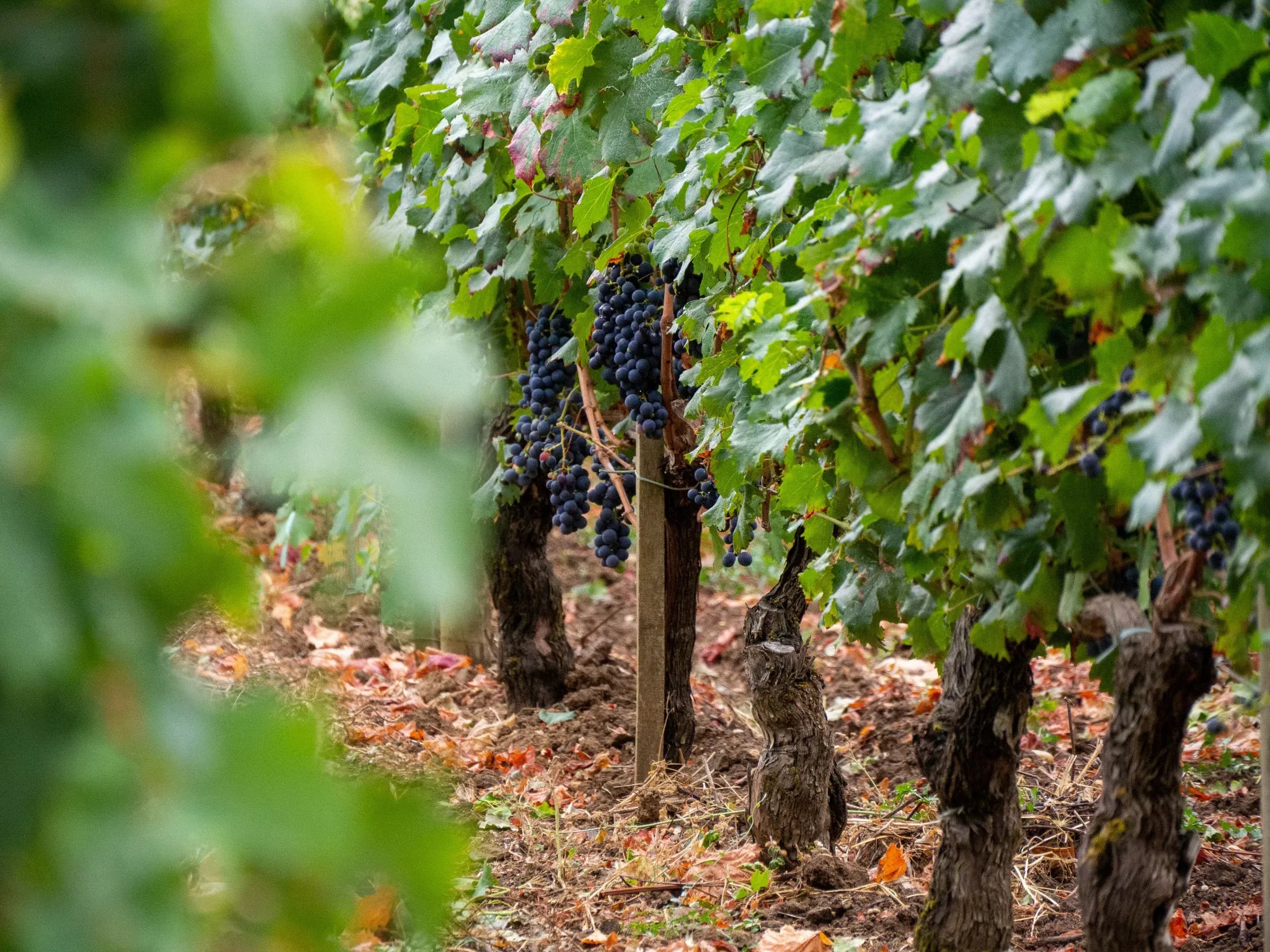
Merlot is one of the world’s most widely planted black grape varieties, valued for its supple texture, generous fruit, and versatility in both blends and single-varietal wines.
Originating in the Libournais region of southwest France, it now thrives across Europe, the Americas, and the Southern Hemisphere.
Merlot fulfills two major global roles:
- As the core of Right Bank Bordeaux, bringing plush fruit and structure to blends
- As a single-varietal wine, ranging from soft and plummy to powerful and ageworthy
Its early ripening, medium skin thickness, and adaptability make it both rewarding and challenging: underripe Merlot → green/herbal; overripe → jammy and flat. Great Merlot sits in the climatic middle ground.
2. Grape Characteristics
| Parameter | Merlot |
|---|---|
| Colour | Black |
| Budding / Ripening | Early bud, early ripening |
| Vigour & Yield | High vigour; crop control required |
| Skin Thickness | Medium (thickens in hot, dry vintages → more tannin) |
| Aromatics | Plum, black cherry, cassis, cocoa, bay leaf; graphite/truffle with age |
| Acidity | Moderate |
| Tannin | Medium → medium-plus |
| Hazards | Coulure, botrytis, downy mildew, sunburn, pyrazines if underripe |
| Preferred Soils | Clay, clay-limestone, loam; avoids shallow drought-prone soils |
| Wine Traits | Supple, rounded fruit; can be plush and silky or structured and mineral |
3. Merlot in Blends – Core Roles
A. Softener & Middle-Palate Builder
In Cabernet Sauvignon–dominant blends (e.g., California, Chile, Australia), Merlot provides:
- Softer tannins
- Plush mid-palate weight
- Early drinkability
B. Structural Core (Right Bank Bordeaux)
On clay and limestone soils in Saint-Émilion, Pomerol, and Fronsac, Merlot forms the backbone of iconic blends.
- Dense fruit, depth, longevity
- Cabernet Franc adds lift; Cabernet Sauvignon adds backbone
C. Partner in Super Tuscan Blends
Warm Mediterranean climates (Bolgheri) produce:
- Dark, ripe fruit
- Chocolate/mocha notes
- Luxury Merlot expressions (e.g., Masseto)
In summary: Merlot is not merely a “softener”; in the right terroir, it is the architectural centre of top wines.
4. Single-Varietal Merlot – Styles & Benchmarks
Cool–Moderate Climate
- Red fruit, herbal notes, graphite
- Medium tannin, bright acidity
Regions: NE Italy, Saint-Émilion satellites, Long Island
Moderate–Warm Climate
- Black cherry, plum, blackberry
- Chocolate, mocha richness
Regions: California coastal benchlands, Chile coastal zones
Warm Mediterranean
- Riper black fruit, soft structure
- Full and plush
Region: Tuscany (Bolgheri)
High-Structure & Ageworthy
- Dense palate, firm tannins
- Graphite, truffle, long evolution
Regions: Pomerol, Washington State (Walla Walla, Red Mountain)**
5. Major Growing Regions & Styles
5.1 France – Right Bank Bordeaux
Saint-Émilion, Pomerol, Fronsac
- Soils: Clay, clay-limestone — ideal moisture regulation
- Style: Plum, red/black fruit, graphite, minerality, long ageing
- Key estates:
- Pomerol: Pétrus, Le Pin, Trotanoy
- Saint-Émilion: Cheval Blanc (CF–Merlot), Ausone, Canon, Figeac, Bélair-Monange
5.2 Italy
NE Italy (Friuli, Alto Adige, Trentino)
- Unoaked / lightly oaked varietal Merlot
- Soft, juicy, red-fruited
Tuscany (Bolgheri)
- Super Tuscan blends
- Dense, Mediterranean Merlot (e.g., Masseto, Ornellaia)
5.3 United States
California
- Cooler zones (Sonoma, Santa Cruz): structured, balanced
- Warmer AVAs: rich, soft, sometimes overripe
Washington State
- Benchmark New World Merlot
- Black fruit, cocoa, graphite; high diurnals give structure
- Producers: Leonetti, L’Ecole No. 41, Northstar
Long Island
- European-leaning: red fruit, herbs, moderate tannin
5.4 Chile
- Clonal clarification post-Carmenère confusion
- Rounded, plummy wines in warm zones
- Fresher in coastal, cooler vineyards
5.5 Australia
- Margaret River: Cabernet–Merlot blends with herbal lift
- Yarra Valley, Coonawarra: medium weight, structured, savoury
5.6 New Zealand
Hawke’s Bay (Gimblett Gravels)
- Dark fruit, mineral, firmly tannic, Bordeaux-like
Wairarapa: leafy, structured, cool-climate
6. Viticulture & Production
Viticulture
- Prefers clay-based soils for slow water release
- High vigour managed through canopy control
- Climate sensitivity:
- Underripe → green pyrazines
- Overripe → jammy, low acidity
- Hazards: coulure, botrytis, mildew, sunburn
- Training: Guyot (Europe); VSP/cordon (New World)
Winemaking
- Gentle extraction is key
- Over-extraction becomes bitter if skins thicken
- Oak choices shape style (French = spice/cedar; American = vanilla/chocolate)
- Blending with Cabernets adjusts structure, longevity, and aromatic lift
7. Global Style & Climate Table
| Region | Climate | Soils | Style | Structure |
|---|---|---|---|---|
| Pomerol | Moderate | Clay, iron-rich subsoil | Plush, dark plum, truffle | Silky, medium tannin |
| Saint-Émilion | Moderate | Clay-limestone | Mineral, graphite, firm | Higher tannin |
| Washington | Continental | Volcanic, loess | Black fruit, cocoa, graphite | High tannin, fresh acid |
| California (cool) | Med–warm | Clay-loam | Black cherry, herbs | Medium tannin |
| California (warm) | Warm | Alluvial | Chocolate, ripe fruit | Lower acidity |
| Italy NE | Cool–mod | Alluvial | Red fruit, soft | Medium |
| NZ Hawke’s Bay | Warm coastal | Gravel & clay | Dark fruit, mineral | High tannin |
8. Wines to Seek Out
Right Bank Bordeaux: Pétrus, Le Pin, Trotanoy, Ausone, Canon, Bélair-Monange
United States: Leonetti, L’Ecole No. 41, Duckhorn
Italy: Masseto, Ornellaia
NZ: Gimblett Gravels Merlot blends
Value picks: NE Italian Merlot, Chile coastal vineyards, Columbia Valley Merlot, Bordeaux satellites
9. Visiting the Regions
- Pomerol & Saint-Émilion: limestone plateaus, ancient cellars, UNESCO landscapes
- Tuscany (Bolgheri): maritime influence, iconic Super Tuscan estates
- Washington State: basalt cliffs, desert vineyards, benchmark Merlot sites
- NE Italy: approachable varietal Merlot perfect for comparative tastings
10. Summary
Merlot is one of the world’s most adaptable black grapes, producing wines that range from silky and plummy to powerful and mineral.
Its dual identity—as the backbone of Right Bank Bordeaux blends and a distinctive single-varietal wine—gives it global importance.
Today’s best Merlot combines balance, terroir expression, and refined tannin architecture, reaffirming its place among the world’s great noble varieties.
Check your knowledge
Expert quiz