Galicia Beyond Rías Baixas
Galicia Beyond Rías Baixas: The Atlantic–Continental Frontier
1. Geographic and Climatic Overview
Inland Galicia follows the Miño, Sil, and Bibei river valleys where Atlantic freshness meets a continental climate of warm days, cool nights, and lower rainfall than on the coast.
Four Denominaciones de Origen make up this inland zone:
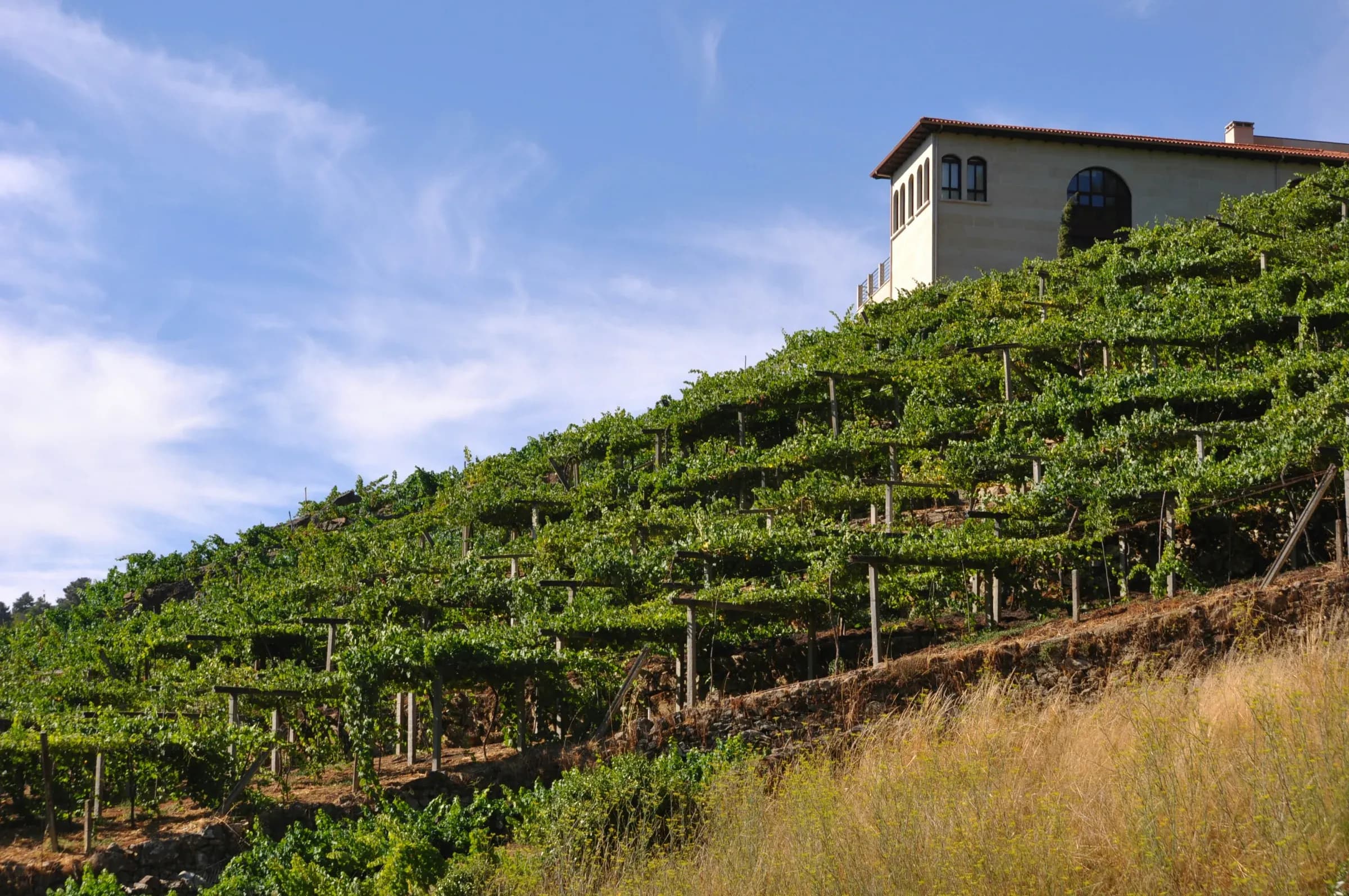
- Ribeira Sacra – steep slate and schist terraces; “heroic” viticulture; mineral reds led by Mencía.
- Valdeorras – easternmost and most continental; benchmark for Godello whites.
- Monterrei – near the Portuguese border, warmest and most sheltered; balanced reds and whites.
- Ribeiro – close to Ourense; Galicia’s oldest DO, known for Treixadura-based blends with perfume and texture.
Vineyard area: ≈ 5,500 ha combined.
Rainfall: 600–1,200 mm depending on DO.
Altitude: 200–800 m; Ribeira Sacra’s terraces are among Spain’s steepest.
Climate: Transitional Atlantic–continental; frost risk in spring, hot dry summers, large diurnal variation inland.
2. Soils and Terroir
| DO | Dominant Soils | Altitude & Aspect | Stylistic Impact |
|---|---|---|---|
| Ribeira Sacra | Slate (lousa), schist, granite | 300–800 m; steep river-bank terraces | Heat-holding rock → mineral, structured reds; “heroic” hand farming |
| Valdeorras | Slate, clay-limestone, some granite | 400–700 m | High diurnal range → aromatic, age-worthy whites and firm reds |
| Monterrei | Clay-sandy over slate and granite | 400–600 m | Warm, fertile; produces ripe fruit and softer acidity |
| Ribeiro | Granite with schist and alluvial lenses | 200–400 m | Moderate warmth; floral, textural whites; gentle oak or lees work |
3. Grape Varieties — Viticultural and Wine Characteristics
| Variety | Colour | Budding / Ripening | Bunch / Berry & Vigour | Typical Yield (hl/ha) | Disease & Climate Sensitivity | Preferred Soils / Sites | Vine Characteristics Summary | Resulting Wine Style |
|---|---|---|---|---|---|---|---|---|
| Godello | White | Early–mid bud; mid ripening | Compact clusters; small berries; moderate vigour | 45–55 | Moderate mildew risk; tolerates drought; sensitive to coulure | Slate, limestone & poor granite slopes | Balanced growth; thrives on well-drained terraces; responds to low yields | Structured, mineral whites with quince and pear; high extract; ages well; suited to oak & lees |
| Treixadura (Trajadura) | White | Mid bud; late ripening | Compact bunches; thin skins; high vigour | 50–60 | Mildew & botrytis prone | Warm granite or schist slopes | Needs airflow & yield control; benefits from low fertility | Medium acid; floral, pear, soft texture; body in Ribeiro blends |
| Albariño (inland) | White | Early bud; early ripening | Small loose clusters; thick skins; moderate vigour | 60–70 | Fair mildew resistance; frost-sensitive | Granite / schist south slopes | Adapts to VSP or pergola; reliable inland | Citrus and stone fruit; crisp acidity; adds precision to blends |
| Loureira (Loureiro) | White | Early bud; mid ripening | Large compact bunches; very vigorous | 60–70 | Mildew & botrytis sensitive | Moist granite-sandy valleys | Needs pergola airflow; coastal humidity tolerant | Highly aromatic: lime, bay leaf, herbs; lifts blends |
| Dona Branca / Doña Blanca | White | Mid bud; late ripening | Large bunches & berries; vigorous | 55–65 | Hardy; resists mildew; oxidises if overripe | Dry, stony terraces | Thrives on heat; productive unless pruned | Moderate acid, apple & melon tones; softens blends |
| Mencía | Red | Early–mid bud; mid ripening | Medium clusters; thin skins; upright habit | 45–55 | Mildew & rot sensitive; thin skins need air flow | Slate & schist terraces | Moderate vigour; low colour; prefers sun-exposed sites | Red-cherry & floral aromas; fine tannin, high acid; elegant, mineral reds |
| Brancellao (Alvarelhão) | Red | Mid bud; late ripening | Small loose clusters; low fertility | 35–45 | Mildew resistant; coulure risk | Warm, drained granite / schist | Low-yielding; long season; delicate | Pale, high-acid, perfumed reds (cranberry, rose, spice) |
| Sousón (Vinhão) | Red | Mid bud; late ripening | Small tight clusters; thick skins | 40–50 | Hardy; late harvest mildew risk | Warm, deep granite or clay | Low yield; needs warmth | Deep colour, firm tannin, black fruit & spice; structure in blends |
| Caiño Tinto | Red | Late bud; late ripening | Small loose clusters; moderate vigour | 45–55 | Rot risk if shaded | Warm, free-draining granite slopes | Prefers open canopies; slow steady ripening | Spicy, taut reds with red-cherry & laurel; high acid backbone |
| Mouratón (Juan García) | Red | Early bud; mid ripening | Large bunches; vigorous | 50–60 | Moderate mildew | Alluvial valleys | Fruitful; requires crop control | Soft red-berry fruit; supple tannin; adds roundness |
| Merenzao (Trousseau) | Red | Mid bud; late ripening | Small clusters; thin skins; low vigour | 35–45 | Mildew & sunburn susceptible | High, well-drained terraces | Needs warm autumn to ripen | Light colour, high acid; floral, silky; aromatic lift |
4. Viticulture
- Terraces (socalcos) in Ribeira Sacra require manual work; erosion control essential.
- VSP and Guyot pruning common elsewhere; bush vines retained in old plots.
- Typical yields: 40–55 hl/ha (lower for top wines).
- Disease profile: less mildew than coastal Galicia but higher risk of frost and drought.
- Organic trend: widespread cover crops, reduced tillage, and gravity-flow vineyard logistics.
- Harvest: entirely manual; selective picking for ripeness and health.
5. Winemaking Styles by DO
| DO | Dominant Wines | Key Techniques | Typical Style |
|---|---|---|---|
| Ribeira Sacra | Mencía-based reds; minor Godello | Whole-cluster, native yeast; neutral oak, amphora | Juicy, floral, mineral reds with fine tannin (“Atlantic Burgundy”) |
| Valdeorras | Godello whites; Mencía reds | Stainless + lees; barrel ferment/age for top Godello | Broad, mineral whites; firm, age-worthy reds |
| Monterrei | Balanced reds & whites | Cool ferments; older oak | Ripe fruit, soft acidity; early-drinking charm |
| Ribeiro | Treixadura-led blends | Steel or oak; lees contact | Fragrant, rounded whites; floral complexity |
6. Leading Producers
Ribeira Sacra
- Guímaro – Organic terraces; Mencía core with Brancellao and Sousón components; whole clusters, low-oak style.
- Envínate (Lousas) – Old-vine field blends (~85–90 % Mencía with Brancellao, Grao Negro, Garnacha Tintorera); wild yeast; slate terroir focus.
- Dominio do Bibei – Biodynamic; Mencía and Brancellao with minor natives; deep, age-worthy texture.
- Fedellos do Couto / Peixes – High-altitude field blends (Mencía, Mouratón, Grao Negro); very delicate extraction.
- Adega Algueira – Estate vineyards; indigenous-variety blends (Caíño, Sousón, Brancellao, Merenzao) alongside single-vineyard Mencía; refined use of neutral oak.
Valdeorras
- Rafael Palacios – As Sortes & O Soro; barrel-fermented Godello; Spain’s fine-white benchmark.
- Valdesil – Old Godello vines (1885 Pedrouzos plot); mineral, saline focus.
- Godeval – Stainless + lees; pioneering modern Godello producer.
- A Coroa – Elegant, floral Godello; balanced, early-drinking style.
Monterrei
- Quinta da Muradella (José Luis Mateo) – Single-parcel wines from native grapes; avant-garde; long-lived.
- Pazos del Rey / Gargalo – Benchmark for ripe, approachable DO expressions.
Ribeiro
- Viña Meín – Emilio Rojo – Biodynamic Treixadura field blends; multiple vessels (steel, foudre, amphora).
- Coto de Gomariz – Organic; Treixadura with Godello, Loureira, Albariño; partial large-oak ageing.
- Casal de Armán – ~90 % Treixadura; lees-aged; also red Sousón-Brancellao-Caíño blend.
- Luis Anxo Rodríguez – Traditional Treixadura whites & Brancellao/Caíño reds; long lees, oxidative nuance.
7. Market and Identity
- Output: ~250,000–300,000 hl/year combined.
- Exports: rising; UK, USA, and Nordic countries key.
- Positioning: fine-wine focus; artisanal scale; “Atlantic mountain wines.”
- Flagship styles:
- Godello (Valdeorras) – Spain’s leading fine white.
- Mencía (Ribeira Sacra) – elegant cool-climate red.
- Domestic market: strong in Galicia and high-end Spanish restaurants.
8. Future Outlook
Strengths
- Distinctive native varieties with strong terroir expression.
- International acclaim for Godello and Mencía.
- Old vines and diverse field blends provide depth and authenticity.
Weaknesses
- Small scale and steep-slope labour costs.
- Limited marketing cohesion across DOs.
Opportunities
- Export growth for premium Atlantic whites and reds.
- Revival of forgotten reds (Brancellao, Sousón, Caiño Tinto) adding complexity.
- Sustainable certification and potential UNESCO recognition for Ribeira Sacra terraces.
Threats
- Climate stress (erosion, drought, frost).
- Labour shortages and rural depopulation.
- Global Albariño / Alvarinho expansion diluting Galicia’s white-wine exclusivity.
Outlook:
Inland Galicia is Spain’s most dynamic cool-climate frontier. Granite and slate terraces yield textural Godello, perfumed Mencía, and Treixadura blends of striking precision. With continued sustainability and cohesive promotion, Ribeira Sacra and Valdeorras stand poised alongside Rioja and Priorat as Spain’s next great fine-wine regions.
Check your knowledge
Expert quiz