Beaujolais Spotlight
1. Location and Climate
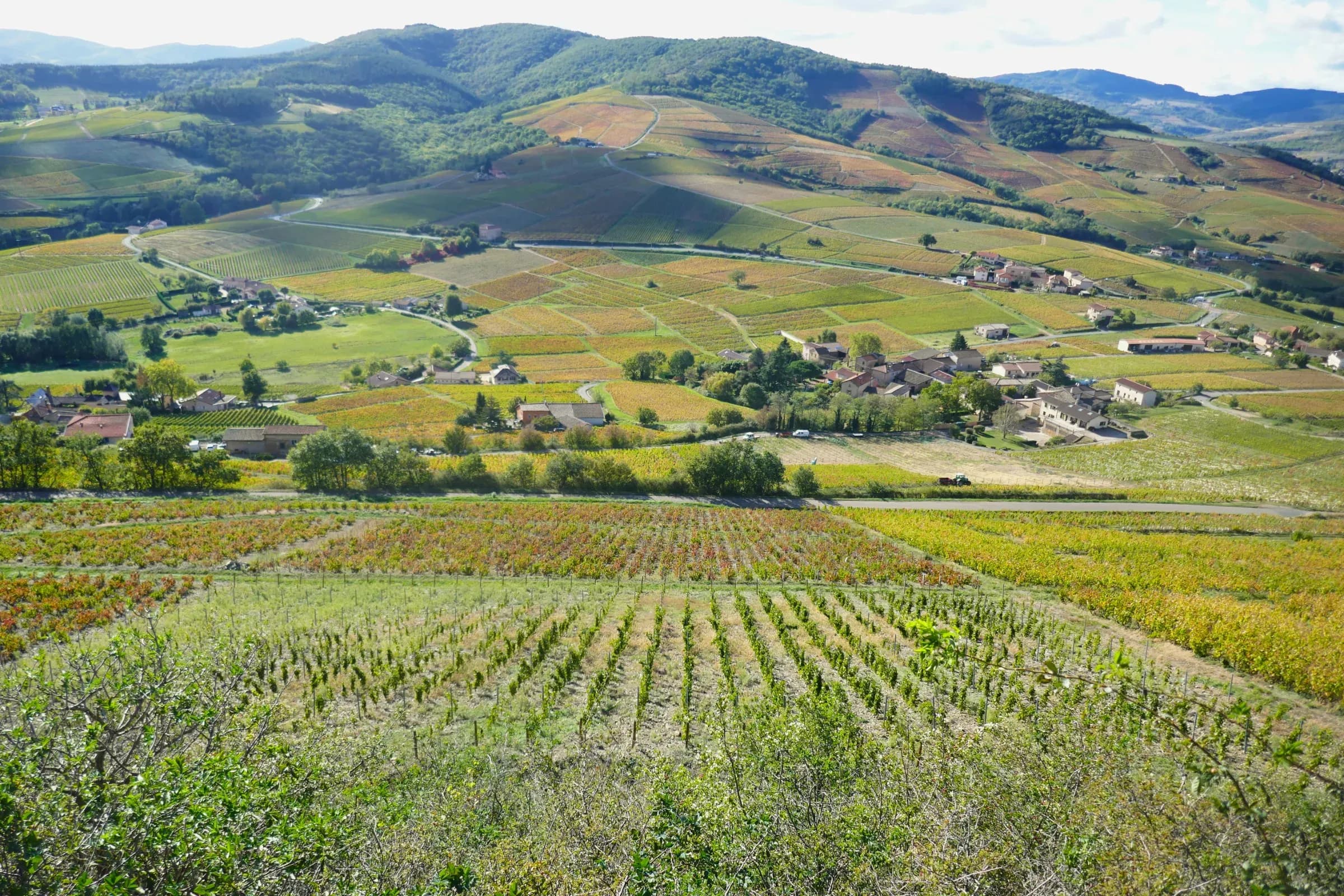
Beaujolais is a wine region in eastern France, lying between Burgundy to the north and the northern Rhône to the south.
It covers about 15,000 ha of vineyards, stretching roughly 55 km from the Mâcon area to just north of Lyon.
The climate is semi-continental with some Atlantic influence — cold winters, frost risk in spring, and warm summers that can bring storms or hail.
2. Soils and Vineyards
Beaujolais has two main soil zones that strongly influence wine style:
| Zone | Soil Type | Characteristics | Resulting Wine Style |
|---|---|---|---|
| Northern Beaujolais (Crus area) | Granite and schist | Poor, free-draining soils on slopes | Concentrated, mineral, age-worthy wines |
| Southern Beaujolais | Clay-limestone and alluvial soils | More fertile and moisture-retentive | Softer, fruitier, early-drinking wines |
Vineyards sit mostly on east- and southeast-facing slopes between 200 m and 450 m elevation, which help protect from frost and improve ripening.
3. Grape Varieties
| Grape | Traits | Contribution |
|---|---|---|
| Gamay Noir à Jus Blanc | Black-skinned, early-budding and early-ripening. Prefers poor granite soils. | Produces light- to medium-bodied wines with bright red-fruit flavours and high acidity. |
| Chardonnay | Early-ripening white variety grown mainly in the south. | Used for Beaujolais Blanc; crisp and citrus-led. |
Gamay accounts for over 95 % of all plantings, making it the signature variety of Beaujolais.
4. Viticulture
- Traditional vine training is gobelet (bush vine); newer vineyards use trellised Guyot systems for easier management.
- Hand-harvesting is required for quality wines, especially those made by whole-bunch fermentation.
- Yield limits vary: around 60 hl/ha for regional wines, lower (≈ 50 hl/ha) for crus.
- Older vines (40–80 years) naturally give smaller crops and more concentrated fruit.
- Many growers now work with organic or sustainable certification.
5. Appellations and Styles
Beaujolais has a three-tier hierarchy:
| Level | Area | Typical Style | Ageing Potential |
|---|---|---|---|
| Beaujolais AOC | Southern plains | Light-bodied, juicy, low-tannin reds for early drinking | 1–2 years |
| Beaujolais-Villages AOC | Northern and central hills | More depth and floral notes; medium body | 2–4 years |
| Cru Beaujolais (10 Crus) | Northern granite hills | Structured, complex, terroir-driven wines | 3–10 years + |
The Ten Crus (north → south)
Saint-Amour, Juliénas, Chénas, Moulin-à-Vent, Fleurie, Chiroubles, Morgon, Régnié, Brouilly, Côte de Brouilly
- Moulin-à-Vent & Morgon – fullest-bodied, capable of ageing 10 years or more.
- Fleurie & Chiroubles – lighter, floral and elegant.
- Brouilly & Côte de Brouilly – fruit-driven and approachable young.
6. Winemaking
Most Beaujolais wines are made using some form of carbonic or semi-carbonic maceration, which enhances fruitiness and softens tannins.
Main methods
- Carbonic maceration – whole berries ferment in a CO₂-rich environment; creates bright, fruity, low-tannin wines.
- Semi-carbonic maceration – natural fermentation starts under the weight of the grapes; gives more structure and freshness.
- Traditional fermentation – destemmed fruit and longer maceration; used for crus to produce deeper colour and firmer tannins.
Ageing usually takes place in stainless steel or cement, with some producers using large old oak barrels for texture rather than oak flavour.
7. Typical Wine Styles
| Category | Flavour Profile | Body / Tannin | Example Drinking Window |
|---|---|---|---|
| Beaujolais Nouveau | Juicy red fruits, banana or bubble-gum notes | Light body, low tannin | Drink within months of release |
| Beaujolais / Villages | Red cherry, raspberry, floral hints | Light- to medium-bodied, fresh acidity | 1–3 years |
| Cru Beaujolais | Ripe red and dark fruits, mineral and spicy tones | Medium- to full-bodied, fine tannins | 3–10 years + |
8. Strengths and Challenges
Strengths
- Distinctive expression of Gamay on granite soils — fresh, perfumed, and food-friendly.
- Clear quality hierarchy from basic to cru.
- Good value compared with Burgundy reds.
Challenges
- Historic image of Beaujolais Nouveau as simple and short-lived.
- Uneven quality in fertile southern vineyards.
- Climate risks: frost, hail, and heat stress affecting acidity.
9. Summary
Beaujolais is a region of diverse terroirs and wine styles, ranging from light, early-drinking reds to serious, age-worthy crus.
Its cool climate, granite soils, and the expressive Gamay grape produce wines known for freshness, bright fruit, and charm.
Modern growers increasingly focus on sustainability and terroir, giving Beaujolais a renewed reputation as one of France’s most distinctive and versatile red-wine regions.
Check your knowledge
Enthusiast quiz