Beaujolais Spotlight
1. Location and Climate
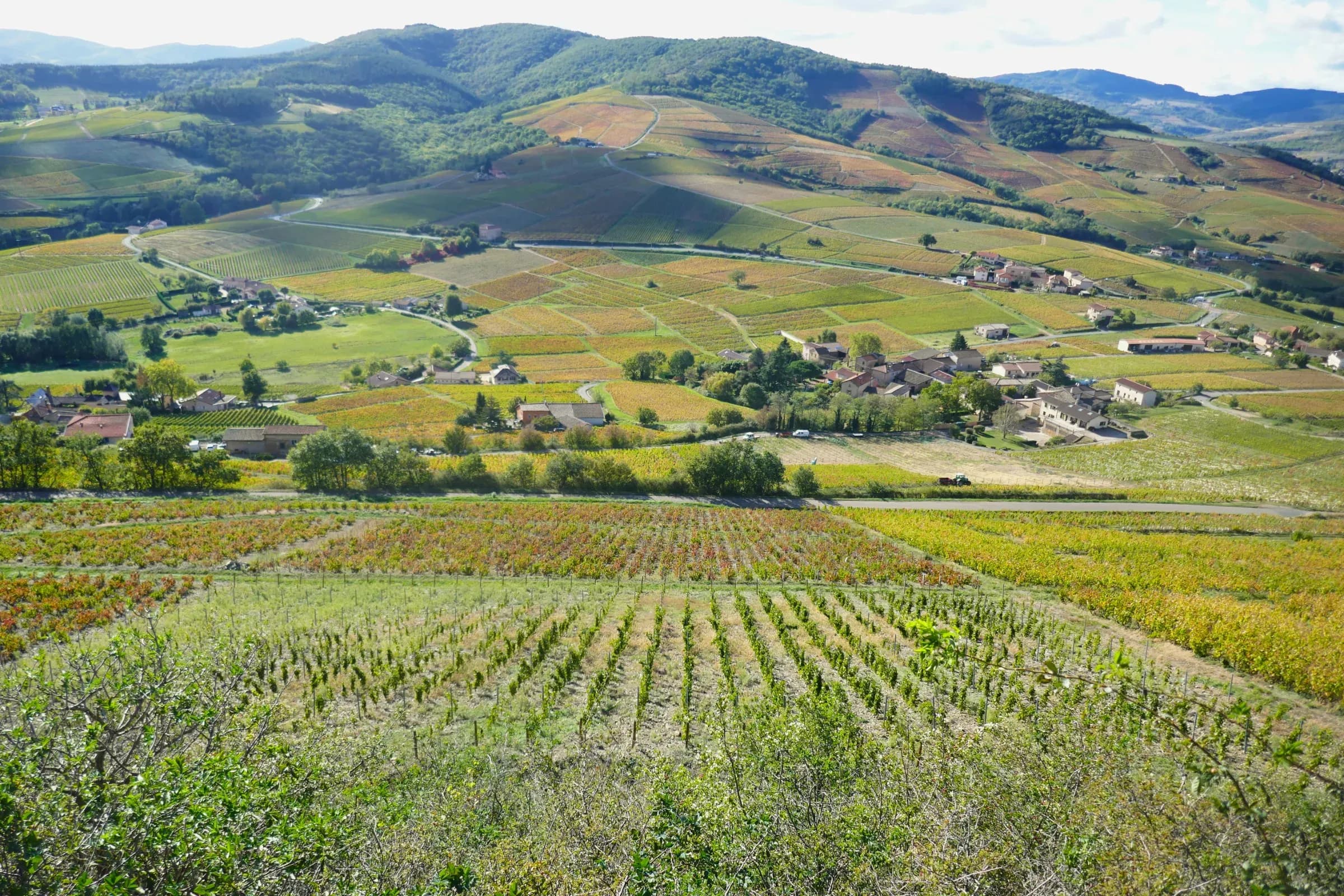
Beaujolais is a wine region in eastern France, between Burgundy to the north and the Rhône Valley to the south.
It covers about 15,000 hectares of vineyards.
The climate is cool to warm continental, with cold winters, spring frosts, and warm summers.
These conditions help grapes ripen slowly and keep the wines fresh and fruity.
2. Soils and Vineyards
Beaujolais has two main types of soils:
- In the north, the hills are made of granite and schist, which are poor and well-drained. These produce wines with more depth and structure.
- In the south, the soils are clay and limestone, richer and more fertile, giving softer, fruitier wines.
Most vineyards are on gentle slopes, facing east or southeast to catch the morning sun.
3. Main Grapes
| Grape | Description | What it Adds |
|---|---|---|
| Gamay Noir à Jus Blanc | A black-skinned grape that buds and ripens early; prefers granite soils. | Gives light- to medium-bodied wines with red-fruit flavours and bright acidity. |
| Chardonnay | A white grape found mainly in the south of Beaujolais. | Used for Beaujolais Blanc; adds freshness and citrus flavours. |
Gamay is by far the most important grape, making over 95% of the region’s wines.
4. Appellations and Styles
Beaujolais wines come in three main categories:
| Category | Typical Style | Drinking Time |
|---|---|---|
| Beaujolais AOC | Light, fruity reds; soft and easy to drink. | Enjoy young. |
| Beaujolais-Villages AOC | More depth and floral notes; medium body. | Drink within 2–4 years. |
| Cru Beaujolais | From the 10 best villages in the north; more complex and structured. | Can age up to 10 years. |
The Ten Crus
Saint-Amour, Juliénas, Chénas, Moulin-à-Vent, Fleurie, Chiroubles, Morgon, Régnié, Brouilly, and Côte de Brouilly.
- Moulin-à-Vent & Morgon – fuller-bodied and longest-lived.
- Fleurie & Chiroubles – lighter, floral, and elegant.
- Brouilly & Côte de Brouilly – fruity and approachable young.
5. How Beaujolais Is Made
Most Beaujolais red wines are made using the traditional method for light reds called carbonic maceration.
- Whole grape bunches are put into a closed tank filled with carbon dioxide (CO₂).
- Fermentation starts inside the berries, creating bright, fruity flavours and soft tannins.
- After a short time, the juice is pressed and finished like normal wine.
Some producers use a mix of this technique and traditional fermentation for more structured wines.
6. Typical Styles
| Wine Type | Flavour & Style | When to Drink |
|---|---|---|
| Beaujolais Nouveau | Very light and fruity; red cherry, raspberry, and banana notes. | Drink as soon as released in November. |
| Beaujolais / Villages | Juicy red fruits, floral notes, fresh acidity. | Within 1–3 years. |
| Cru Beaujolais | Ripe fruit, spice, and minerality; more body and depth. | 3–10 years, depending on the cru. |
7. Strengths and Challenges
Strengths
- Famous for fresh, fruit-driven wines.
- Offers excellent value for money.
- Distinctive Gamay grape produces wines that are easy to enjoy.
Challenges
- The old image of Beaujolais Nouveau as simple wine still affects its reputation.
- Weather risks like frost and hail can damage crops.
8. Summary
Beaujolais is a region of fresh, lively red wines made mainly from the Gamay grape.
Its mix of granite soils, rolling hills, and a cool climate gives wines that are vibrant, fruity, and full of charm.
From light and easy Beaujolais to the serious, structured Crus, this region offers something for every wine lover.
Check your knowledge
Explorer quiz